Our Journey Continues: From Camp 1 to Camp 2 on Aconcagua
15 December 2024 — Sunday
After our first night at Camp 1, Camp Canadá, we woke to an unusual stillness. The previous night, the wind had howled around our large dome tent, rattling its metal framework and reminding us just how exposed we were on the slopes of Aconcagua. Now, there was barely a breeze.
We had deliberately planned a late start. Apart from allowing the morning sun to warm the mountainside, we were waiting for the high-altitude climbing porters to arrive from Plaza de Mulas. We needed to hand over some of our additional equipment before continuing higher.
Our destination was Camp 2, Nido de Cóndores, at approximately 5,570 metres above sea level.
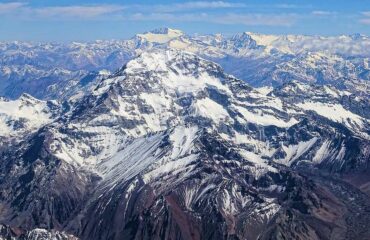
On a map, the route looked relatively straightforward. From Camp Canadá, the trail traverses diagonally across the mountainside before reaching a ridgeline, beyond which Camp 2 is located. From there, climbers continue towards Camp 3 and, eventually, the summit.
It sounded simple enough. But as we were about to discover, mountains have a wonderful way of making straightforward plans considerably more complicated!
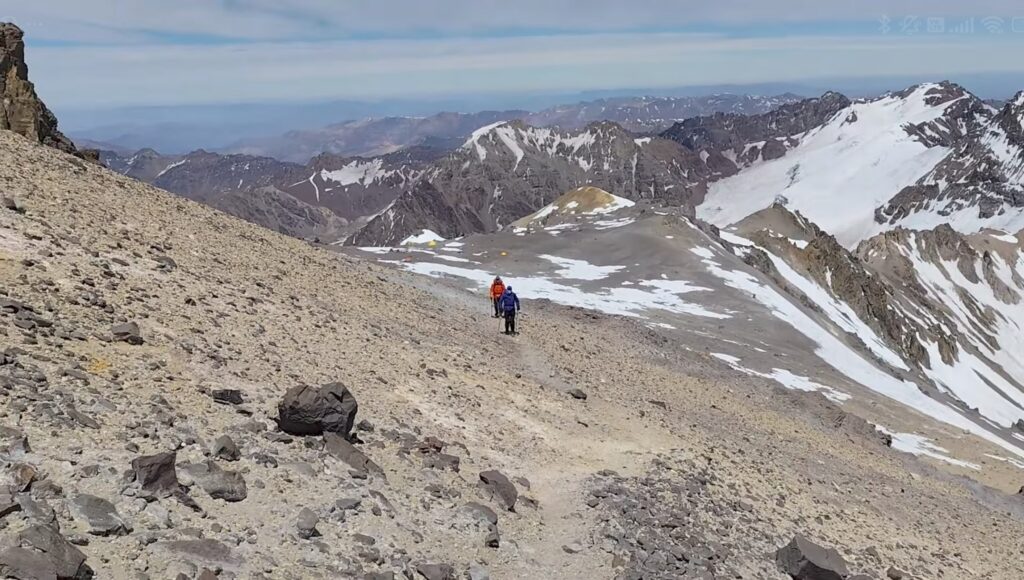
The Deceptive Trail to Nido de Cóndores
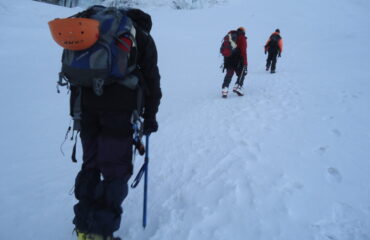
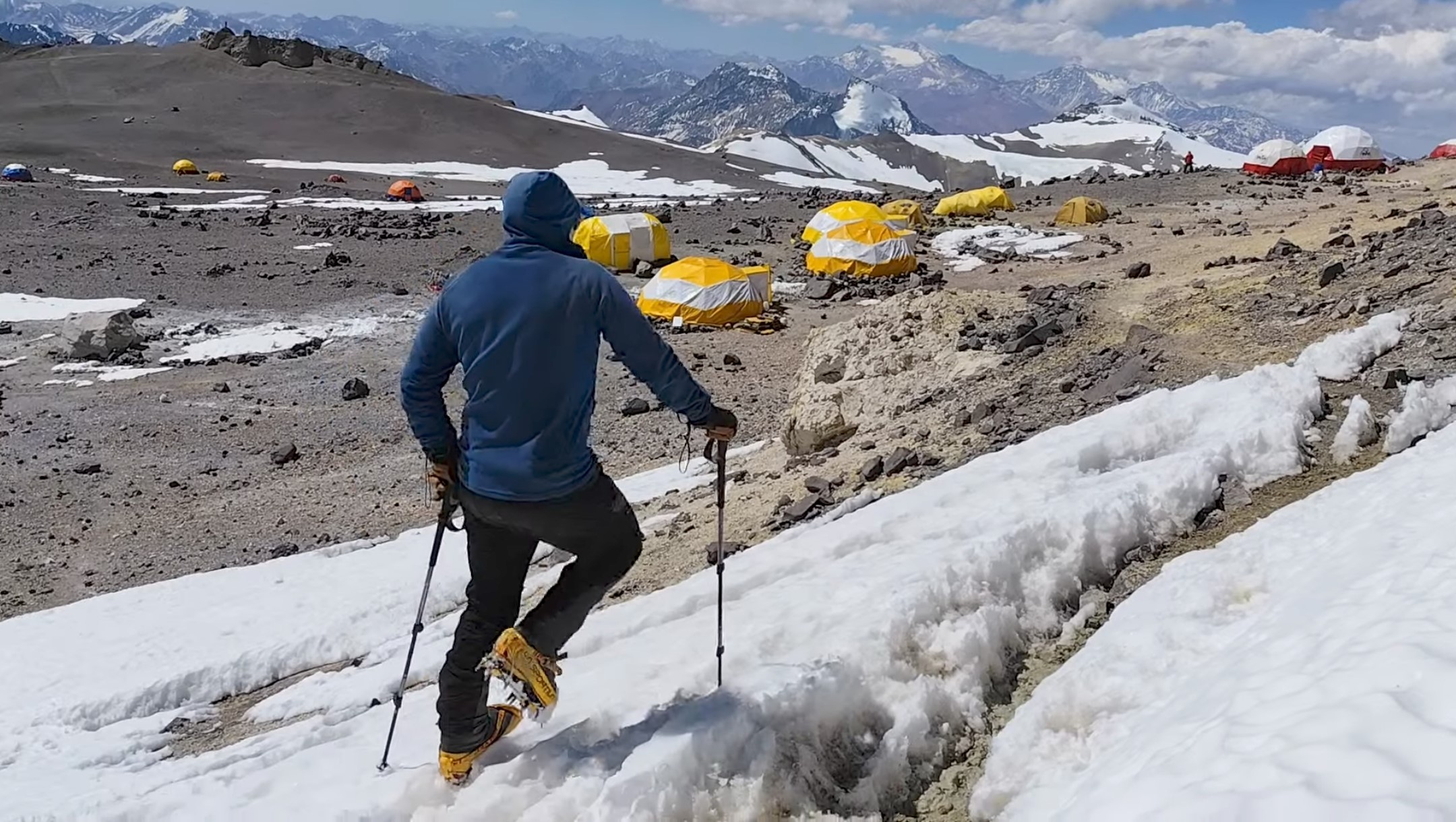
We set off in single file, carrying considerably heavier backpacks than we would have preferred. The trail initially appeared manageable, cutting diagonally across the mountainside towards what looked like a nearby ridge.
However, the loose shale and scree quickly made their presence felt.
Every step required attention. The surface beneath our boots was a mixture of small, loose stones and gravel that shifted under our weight. Instead of gaining ground with every step, we sometimes found ourselves sliding backwards as the loose material gave way beneath our feet.
With a heavy backpack pulling us backwards and the mountainside sloping away beneath us, maintaining balance required constant concentration. It was not technically difficult terrain, but it demanded patience, careful foot placement and a willingness to accept that progress would be slow.
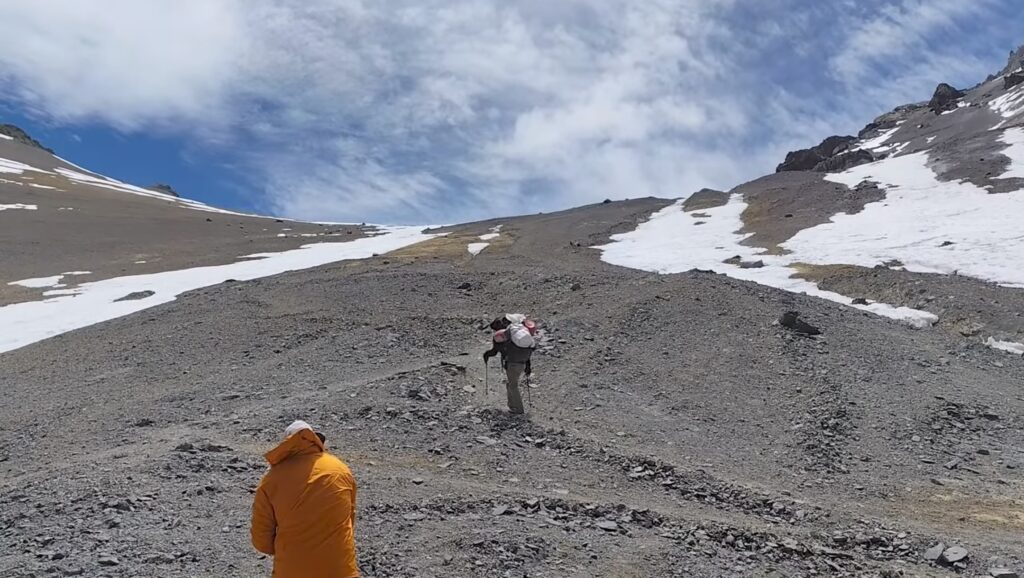
For someone accustomed to measuring progress by distance covered or elevation gained, this was an exercise in humility.
And then came the ridge.
Or rather, what we thought was the ridge.
After climbing steadily for several hours, we finally reached what appeared to be the crest of the mountainside. Surely Camp 2 was just beyond it? We had been told that the campsite lay on the other side, and we were already looking forward to taking off our backpacks and settling in.
But the mountain had other ideas. What we had reached was a false ridge. The actual ridgeline lay further ahead, and the campsite remained frustratingly out of sight.
There is something particularly demoralising about discovering that the destination you thought was just around the corner is still another couple of hours away. At altitude, where every step demands more effort and recovery takes longer, that realisation can be especially difficult to swallow.
We pressed on.
After approximately four and a half hours of climbing, we finally crested the ridge and arrived at Nido de Cóndores.
Welcome to Camp 2: A Different World at 5,570 Metres
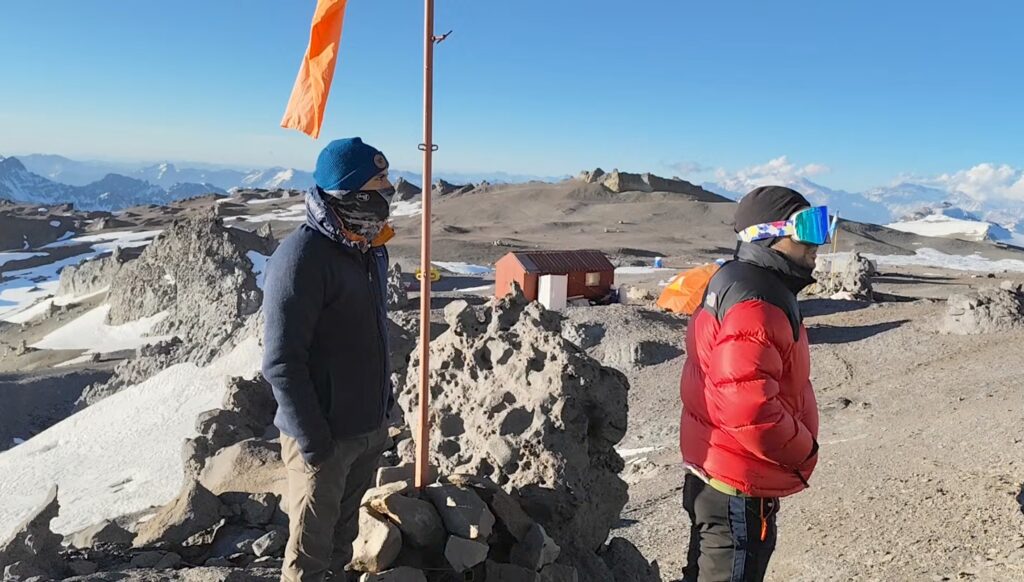
The first things that caught my attention were the helipad and the park ranger station. These were unmistakable signs that we had reached an important staging point on Aconcagua’s Normal Route.
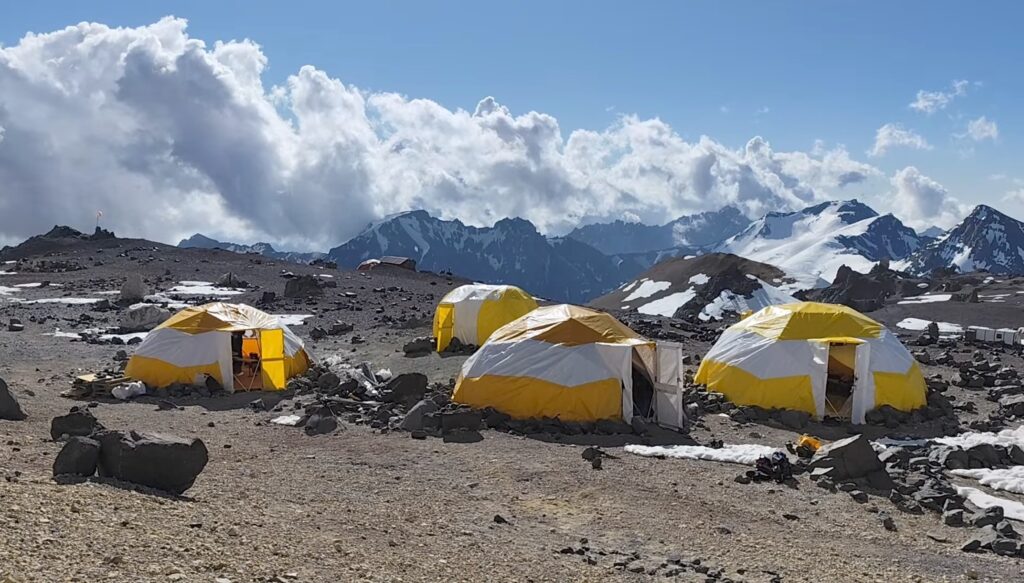
Nido de Cóndores, which translates to the Nest of the Condors, is a vast, relatively flat expanse of rocky terrain spread across the mountainside, with separate areas occupied by different expedition teams.
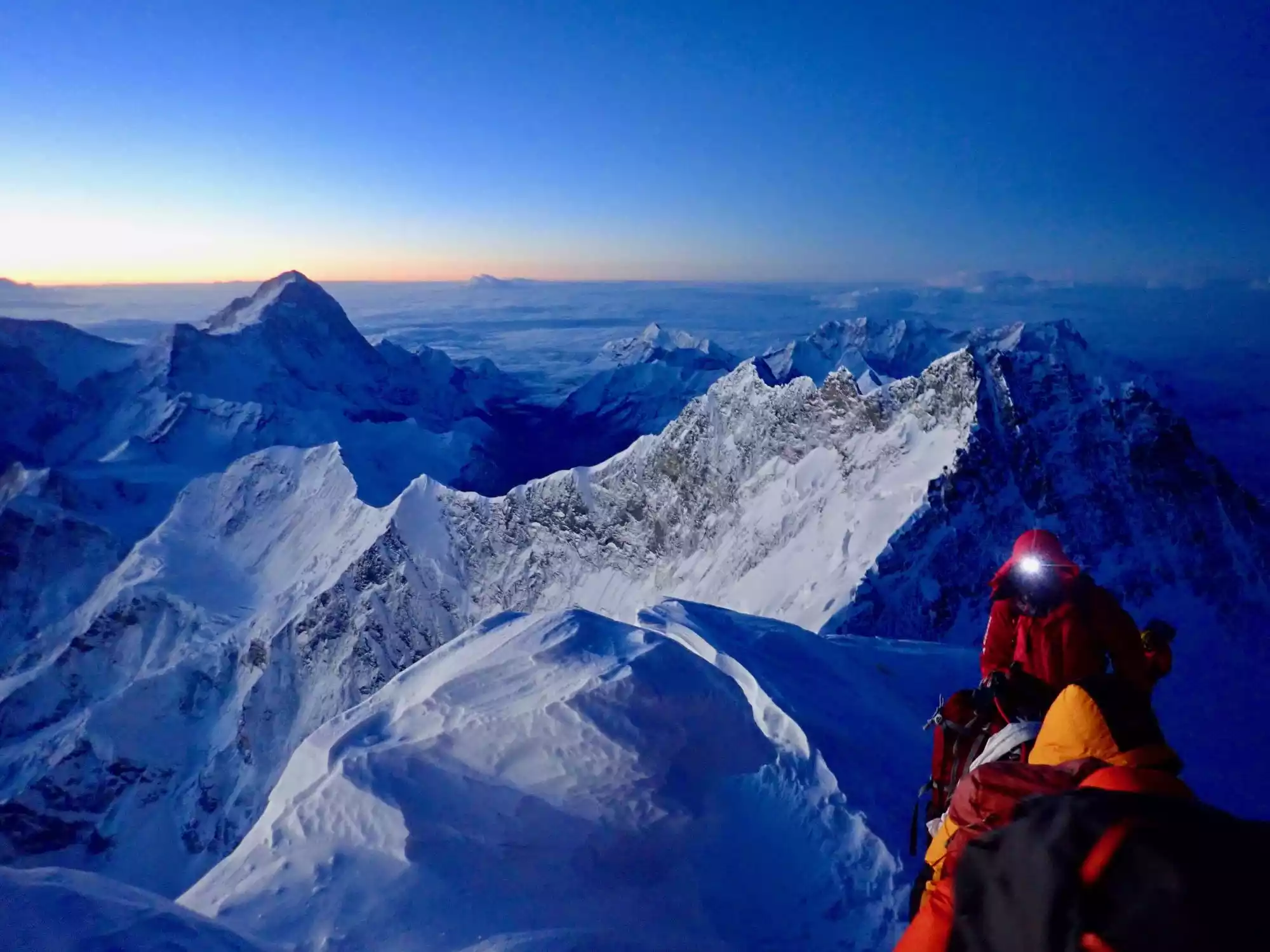
The scale of the campsite immediately reminded me of the South Col on Everest, although Nido de Cóndores felt considerably more expansive. In many ways, it functions as an advanced base camp for climbers preparing to move towards Aconcagua’s upper slopes.
But the physical environment was unlike anything most people would associate with a campsite.
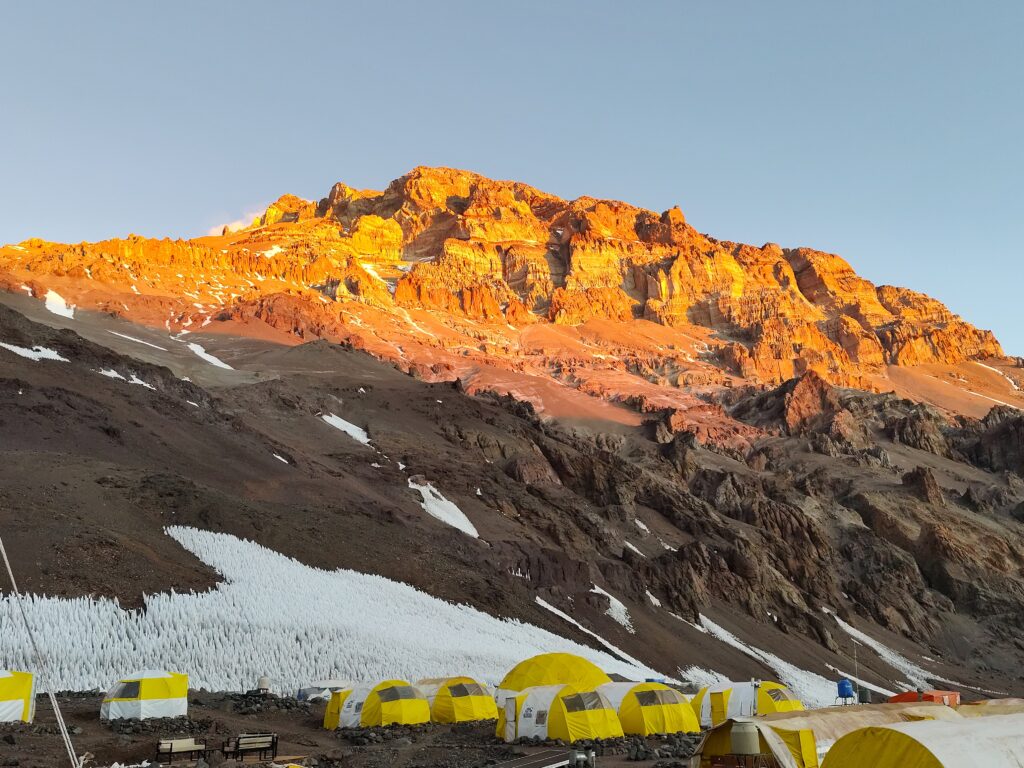
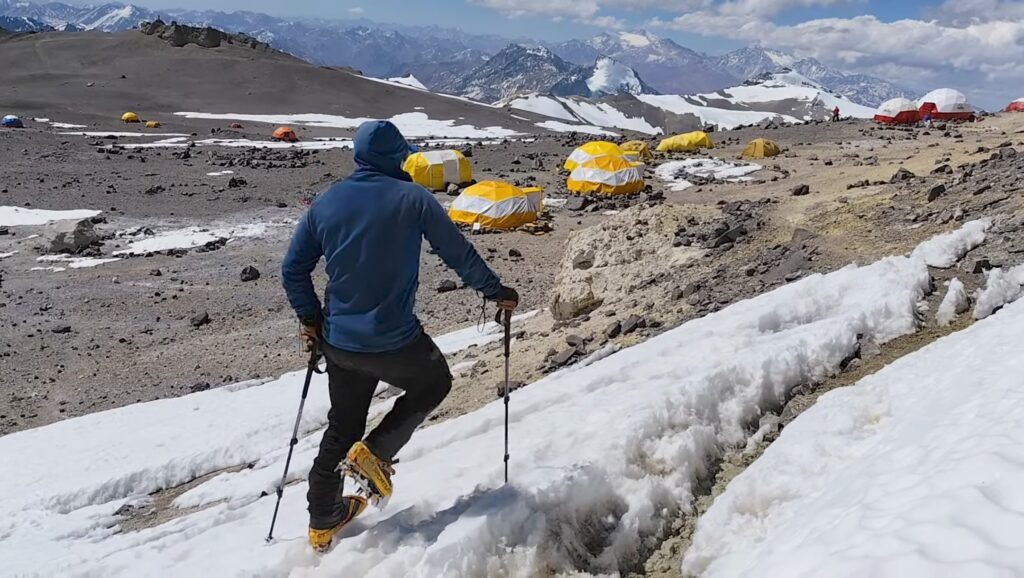
There were no trees, no grass and no vegetation of any kind. The ground was an uninterrupted expanse of rock, gravel and loose earth, broken only by occasional rock formations. Brightly coloured expedition tents stood scattered across the barren landscape, their reds, yellows and oranges providing striking splashes of colour against the muted browns and greys of the mountainside.
The openness was extraordinary.
Looking down, we could see the ridges and valleys through which we had climbed. Looking outwards, layer upon layer of the Central Andes stretched towards the horizon. The sheer scale of the mountain landscape was difficult to comprehend.
And yet, despite the spectacular surroundings, my attention kept returning to one fact.
We were now sleeping at approximately 5,570 metres above sea level.
For a first-time visitor to such an altitude on the Central Andes, that realisation brings a mixture of excitement, disbelief and apprehension. You feel privileged to be there, but you are also acutely conscious of the environment you have entered.
The air is thin. The wind can be relentless. The sun feels surprisingly intense against your face, even when the temperature remains low. And once the sun begins to disappear behind the surrounding mountains, the cold can set in with remarkable speed.
The campsite may look peaceful in photographs, but living here is an entirely different experience.
Life at Camp 2: The Realities of High-Altitude Camping
Once we arrived, there was little time to stand around admiring the scenery. The familiar routine of establishing camp began almost immediately.
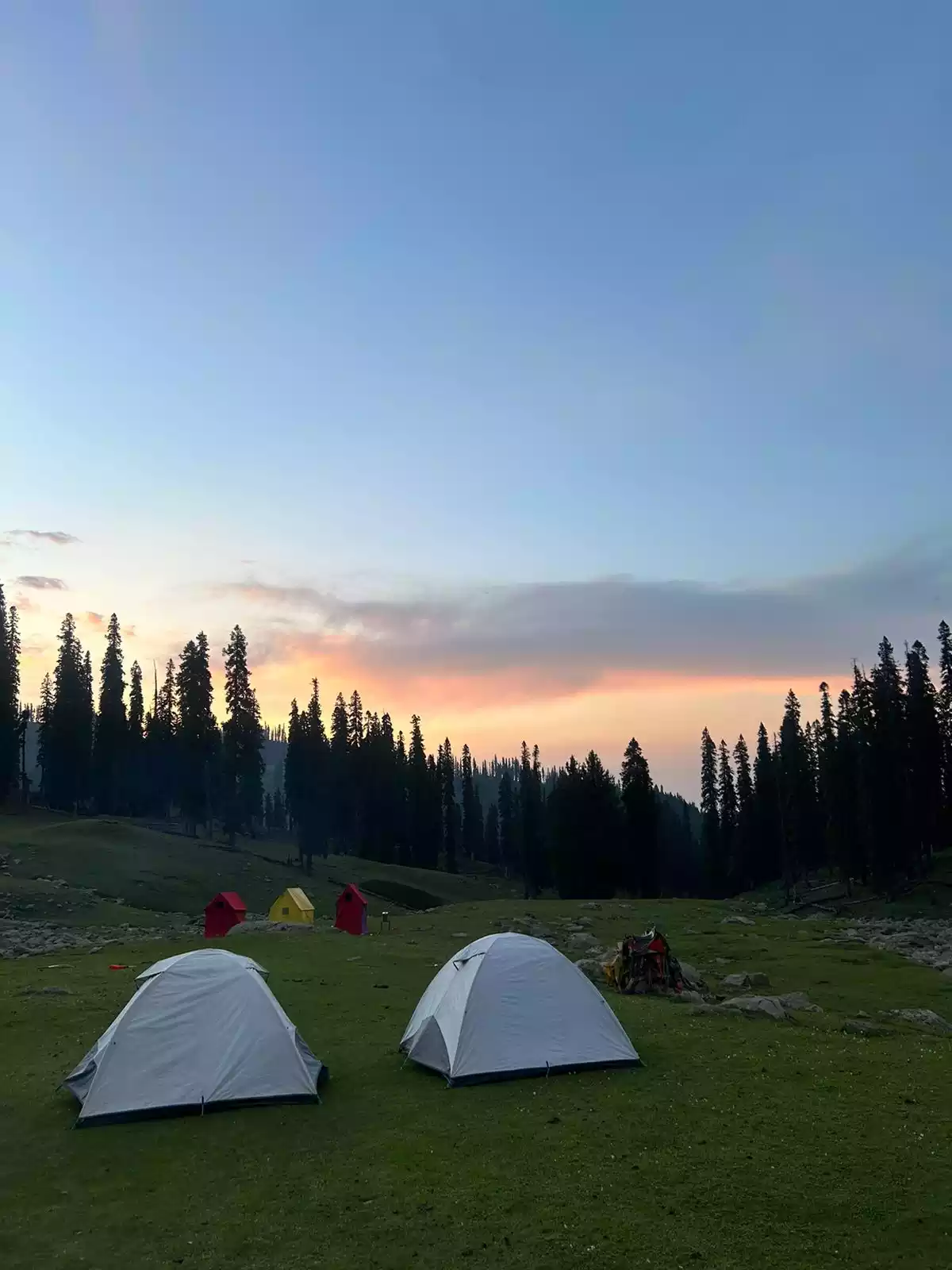
Our accommodation consisted of two large, dome-shaped sleeping tents, a substantial dome-shaped structure serving as the dining and kitchen tent, and a separate oval tent designated as the lavatory.
Compared with the small tents we had used at lower elevations, the larger structures provided a welcome sense of security. At this altitude, shelter is not merely about comfort. It becomes an essential part of managing the conditions on the mountain.
But there was still plenty of work to do.
We accompanied Rubén to collect ice, which would need to be melted to provide enough water for the two nights we planned to spend at Camp 2. Unlike at home, where water is available at the turn of a tap, obtaining drinking water here involved locating suitable ice, carrying it back to camp and patiently melting it.
It is a simple task, yet one that becomes surprisingly laborious at altitude.
The equipment had to be organised, food prepared, water supplies established and sleeping arrangements sorted out. Every small task required time and energy, and both were precious commodities.
By the time we had finished, the reality of our new surroundings had begun to sink in.
At Plaza de Mulas, we had enjoyed the relative comforts of Base Camp, with its dining facilities, lounge tent and opportunities to rest between activities. At Nido de Cóndores, we were much further removed from those comforts. We were exposed to the elements, surrounded by an austere landscape and increasingly dependent on our own preparation and discipline.
This was high-altitude mountaineering in a very different form.
The Altitude Factor: When Fitness Is No Longer Enough
One of the most interesting aspects of climbing Aconcagua is discovering how differently the body behaves as you gain altitude.
I have spent years climbing mountains, and Sauraj and I have both summited Everest. We understand the importance of physical preparation, acclimatisation and mental resilience.
Yet every mountain presents its own challenges, and Aconcagua was no exception.
At approximately 5,570 metres, the reduced availability of oxygen becomes impossible to ignore. Walking a short distance, bending down to organise equipment or simply getting in and out of a tent can require more effort than expected.
You find yourself moving deliberately, conserving energy and becoming more conscious of your breathing. Even seemingly insignificant tasks can leave you wanting to pause for a moment.
There is a certain humility in that experience.
You may arrive with excellent cardiovascular fitness, strong legs and years of climbing experience, but none of these completely eliminates the physiological effects of altitude. Your body still needs time to adapt.
This is why acclimatisation is so important on Aconcagua’s Normal Route. The objective is not simply to climb higher as quickly as possible. It is to allow the body to adjust progressively while monitoring how it responds to the changing environment.
For us, Camp 2 represented a particularly important stage of that process.
We planned to spend two nights at Nido de Cóndores before continuing towards Camp 3, known as Cólera, at approximately 5,950 metres. From there, we would prepare for the summit attempt.
The margin for error was narrowing, and we knew that how well we rested and acclimatised here could have a significant bearing on what lay ahead.
The Part of Mountaineering We Don’t Talk About Enough: Preparing the Mind
There is plenty of information available online about climbing Aconcagua. You can find training schedules, equipment lists, route descriptions, acclimatisation plans and advice on managing the physical demands of a high-altitude expedition.
But I have often felt that there is far less discussion about something equally important: how do you prepare your mind for an experience in which the uncertainty increases with every step you take?
Physical training is relatively straightforward to understand. You build endurance, strengthen your legs, improve your cardiovascular fitness and gradually increase the demands you place on your body.
Mental preparation is less tangible.
How do you train yourself to remain calm when the weather forecast changes? How do you deal with the anxiety of not knowing what the next day will bring? And how do you prepare for an environment in which the consequences of a wrong decision can become increasingly serious?
At Camp 2, these questions were no longer abstract ideas. They were part of our everyday reality.
We had climbed to an altitude where the weather could dictate our plans, where our bodies were operating under considerable physiological stress, and where the summit was close enough to feel attainable but still far enough away to demand respect.
The uncertainty was difficult to ignore.
We could prepare our equipment, monitor the forecasts, follow our acclimatisation schedule and listen to our guide. But we could not control the wind, guarantee favourable conditions or know with absolute certainty how we would feel the following morning.
And perhaps that is one of the hardest lessons in mountaineering: you can prepare for the mountain, but you cannot control it.
Over the years, I have learnt that my mind can sometimes be more exhausting than my body. It can race ahead, imagining every possible problem, rehearsing worst-case scenarios and trying to find answers to questions that cannot yet be answered.
On a mountain, that tendency can be particularly draining.
You might be lying inside a warm sleeping bag, physically safe and with nothing immediately demanding your attention, yet your mind is already at the summit, wondering about the wind, the cold, the route and whether you will make it.
The challenge is to bring yourself back to the present.
Not to ignore the risks or pretend everything will work out, but to distinguish between what requires your attention now and what remains outside your control.
For me, that has become an important part of mental preparation for climbing.
Finding My Own Way to Quiet the Mind
I have experimented with different ways of managing the mental demands of climbing. Two practices that I personally like to use are mindfulness through the Headspace app and breathing exercises inspired by Wim Hof.
Headspace provides guided meditation sessions that help me slow down, pay attention to my thoughts and become more aware of how I am feeling. I find that even a short session can help me step back from the constant stream of thoughts that often accompanies a demanding expedition.
The objective is not to eliminate anxiety altogether. That would be unrealistic, particularly when undertaking something as challenging as climbing Aconcagua.
Instead, I try to recognise the anxiety without allowing it to dominate my thinking.
There is a difference between acknowledging that the summit attempt will be difficult and repeatedly imagining everything that could go wrong. One helps you prepare; the other can consume energy that you will need later.
Mindfulness has helped me become more comfortable with that distinction.
I also like breathing practices associated with Wim Hof. I find that paying attention to my breathing can help me become more conscious of my physical state and interrupt the cycle of anxious thoughts.
On an expedition, however, I believe it is important to be sensible about how and when such techniques are used. Intensive hyperventilation and breath-holding exercises are not something to experiment with while climbing, at altitude or in any situation where dizziness or loss of consciousness could be dangerous. For me, the broader lesson is to use calm, deliberate awareness as a way of managing stress rather than treating breathing techniques as a substitute for acclimatisation or sound mountaineering judgement.
A Few Mental Exercises That Can Help
Over time, I have found that a few simple principles are particularly useful when preparing for a demanding climb.
- Bring your attention back to the present.
When your mind begins racing ahead to summit day, bring your attention back to the task immediately in front of you. It might be organising your equipment, drinking enough water, checking your clothing or preparing for the next day’s climb.
You do not need to solve tomorrow’s problems today.
- Visualise the process, not just the summit.
It is natural to imagine standing on top of Aconcagua. That image can be a powerful source of motivation, but the summit is only one part of the journey.
I find it more useful to visualise the process as well: walking at a steady pace, dealing patiently with difficult terrain, responding calmly when plans change and recognising when to conserve energy.
The aim is to prepare mentally for the experience, not merely fantasise about its outcome.
- Break the challenge into smaller, manageable steps.
Aconcagua can feel overwhelming when you think about the entire climb at once. The summit is nearly 7,000 metres above sea level, and the route ahead can seem daunting.
But you do not climb the whole mountain in a single step.
You focus on reaching the next landmark, completing the next section of trail or getting through the next hour. Smaller, process-focused goals help turn a seemingly enormous challenge into a series of manageable decisions.
- Accept uncertainty without surrendering your judgement.
A changing forecast is not something you can control. Your response to it, however, is something you can work on.
You can gather information, listen to your guide, assess the risks and adapt your plans. You can also accept that the right decision might sometimes be to wait, change the objective or turn around.
Mental resilience is not about forcing yourself forward regardless of the circumstances. It is about remaining clear-headed enough to make the right decision, even when that decision is difficult.
These principles are consistent with widely used approaches in mindfulness and sports psychology, including attentional control, mental rehearsal and process-focused goal setting. They are not guarantees of a successful summit, but they can help climbers approach demanding situations with greater awareness and composure.
Day Two at Camp 2: A Change in Perspective
16 December 2024 — Monday
By the end of our second day at Camp 2, both Sauraj and I were feeling good and strong.
We had spent the previous day settling into the campsite, and now we had a better sense of our surroundings. The initial excitement of reaching Nido de Cóndores had given way to a more settled feeling. We were no longer simply looking around in wonder; we were beginning to feel comfortable in our temporary home on the mountainside.
Our bodies seemed to be responding well to the acclimatisation process, and our confidence was growing. We still had a demanding climb ahead of us, but we felt ready to prepare for the next stage.
We continued to monitor the weather and discuss what the coming days might bring. The summit attempt was getting closer, and there was no escaping the fact that our plans depended on conditions that could change.
Yet something about the day felt different.
Perhaps it was the clear sky after the previous night’s relentless wind. Perhaps it was the satisfaction of having reached Camp 2 and settled in. Or perhaps it was simply the realisation that, for the moment, we had done everything we needed to do.
There was nothing more to gain by worrying about the next 48 hours.
We had to rest, remain alert to the conditions and allow events to unfold.
And then I remembered the previous evening’s late sunset.
The days had been long, and I had been so focused on the practical demands of the expedition that I had not paid enough attention to the extraordinary light lingering over the mountains. Sunset came surprisingly late, and I found myself wanting to stay awake that evening to witness it properly.
I decided to wait.
8:45 pm: A Sunset Over the Central Andes
As the evening progressed, the light began to change across the vast landscape surrounding Nido de Cóndores.
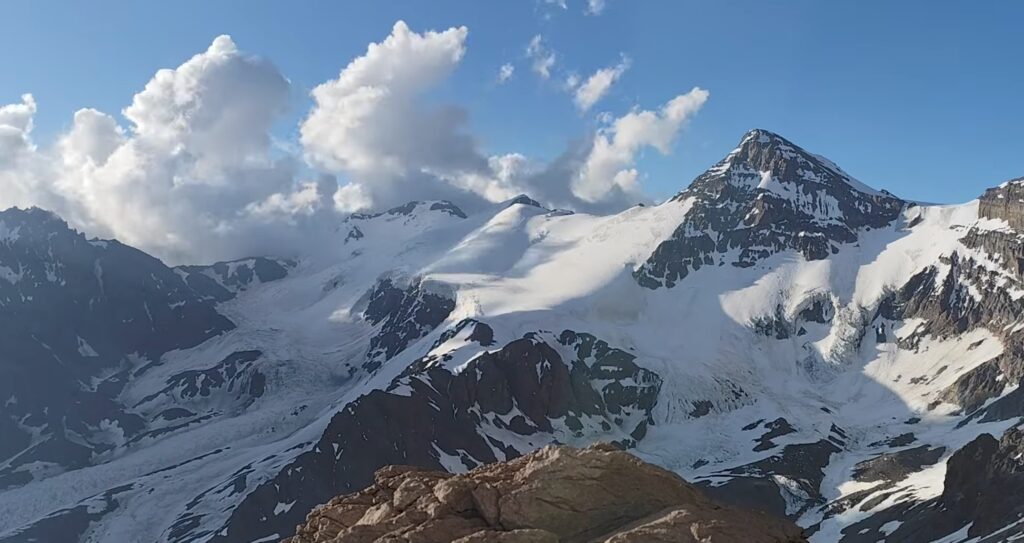
At approximately 8:45 pm, the sun was setting over the Central Andes. The long summer evening allowed the mountains to remain visible long after I would normally have expected darkness to arrive.
The surrounding ridgelines gradually changed colour as the sun sank towards the horizon. The harsher browns and greys of the rocky landscape softened into warmer shades, while the distant mountains seemed to acquire a depth and definition that had been less apparent during the day.
It was a spectacular sight.
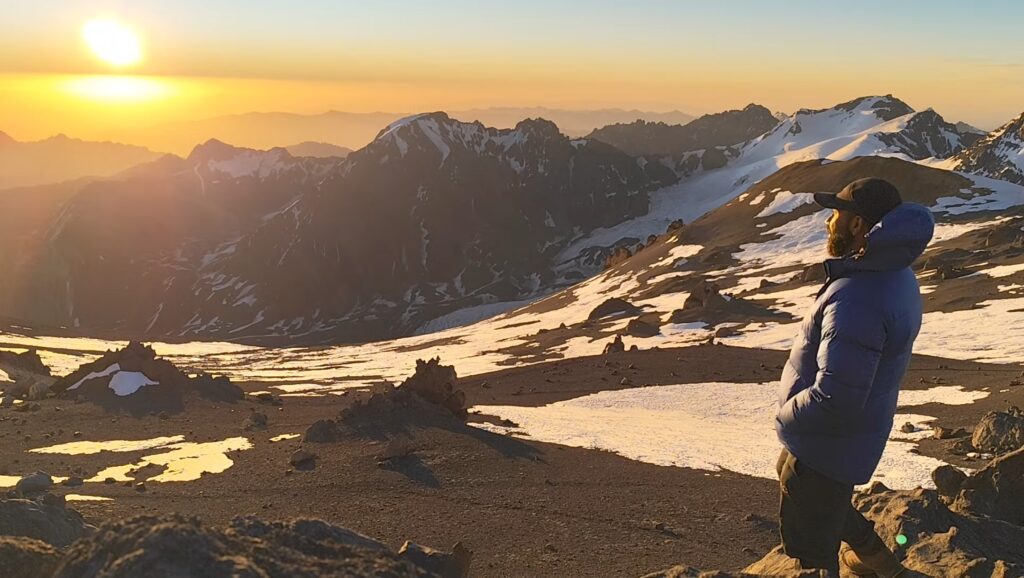
The wind still carried a bite, and the cold was becoming increasingly difficult to ignore. This was not a comfortable place to stand around admiring the scenery. We were at more than 5,500 metres, surrounded by an exposed landscape, and we had a demanding objective ahead of us.
Yet I found myself reluctant to go inside.
I wanted to watch the light change, to take in the view and to capture the moment if I could.
As I stood there looking out over the Central Andes, I became acutely aware of the contrast between the beauty of the landscape and the uncertainty of our situation.
We did not know what the following morning would bring. We did not know whether the weather would cooperate or exactly how the next 48 hours would unfold. The summit was still ahead of us, and there was no guarantee that we would reach it.
There were plenty of reasons to feel anxious.
And yet, standing there in the fading light, I felt none of the restlessness that had accompanied my thoughts earlier in the expedition.
Instead, I felt an extraordinary sense of peace.
It was not because the risks had disappeared, or because I had suddenly become certain of what lay ahead. Nothing about the mountain had changed. The wind was still blowing, the air was still cold, and the uncertainty remained.
What had changed was my relationship with that uncertainty.
For that brief moment, I was not thinking about the summit, the weather forecast or the challenges waiting for us the following day. I was not trying to anticipate every possible outcome or work out how the expedition would unfold.
I was simply there.
Looking at the mountains. Feeling the cold on my face. Watching the last light of the day fade across one of the most extraordinary landscapes I had ever encountered.
And somewhere in that moment, I realised something that is difficult to explain but unmistakable when you experience it.
I knew, in every cell of my body, that I was exactly where I was meant to be, at that particular moment in time.
Not because I knew what would happen next. Not because I was certain of reaching the summit. But because, for once, I was completely at peace with not knowing.
I was where I wanted to be, doing something that mattered deeply to me, alongside a friend with whom I had shared some of the most extraordinary experiences of my life.
The mountain had given me no guarantees. It had made no promises.
And I realised that I did not need it to.
For a few precious minutes, the uncertainty ceased to feel like something I needed to overcome. It was simply part of the experience, as much a part of the climb as the loose scree, the thin air and the relentless wind.
I stood there, watching the last light disappear over the Andes, and felt profoundly grateful.
Grateful for the opportunity to be there. Grateful for the journey that had brought us to this point. And grateful that, despite all the preparation, planning and anticipation, I could still experience a moment that was entirely unexpected.
Perhaps this is one of the things that keeps drawing me back to the mountains.
We go looking for summits, for challenges and for experiences that push us beyond our familiar boundaries. We train for months, plan meticulously and spend enormous amounts of time thinking about the outcome.
But sometimes, the most meaningful moments happen when we stop thinking about the outcome altogether.
That evening at Camp 2, I did not know whether we would reach Aconcagua’s summit.
I did not need to know.
For that moment, simply being there was enough.
The Summit Was Still Ahead
As the light faded and the temperature dropped, it was time to retreat to the shelter of our tent. There was still a climb to prepare for, equipment to organise and a weather forecast to assess.
The following day would bring us closer to the summit attempt, and with it, another set of decisions and challenges.
We would need to remain patient, listen to our guide, monitor the conditions and continue to respect the mountain.
But I went to bed that evening with a different feeling from the one I had experienced on arrival at Camp 2.
I felt rested, optimistic and mentally settled. Sauraj and I were feeling strong, and we had given ourselves the time to acclimatise. We had done what we could to prepare.
The rest was not entirely in our hands.
And perhaps that is the most important lesson I carried away from that sunset: preparation is essential, but so is learning to accept the things you cannot control.
In the mountains, that acceptance is not an excuse to be careless. It is what allows you to remain present, assess the situation clearly and respond to the challenges ahead without being consumed by them.
Aconcagua still had much to teach us.
The summit remained beyond our reach, and the next 48 hours would test both our physical endurance and our mental resilience.
But as I settled into my sleeping bag that night, I found myself thinking less about what could go wrong and more about the privilege of being there.
The climb would continue the following morning.
For now, I was exactly where I wanted to be.
Continue the Aconcagua Expedition Series
In Part 5, our journey continues from Nido de Cóndores towards the higher slopes of Aconcagua, as we prepare for the summit attempt. With the weather, altitude and our own physical condition all playing a role, the next stage would bring us closer to discovering whether we could stand on the highest point in the Americas.
At Adventure Pulse, we believe that mountaineering is about much more than reaching a summit. It is about preparation, perseverance, teamwork and learning to make sound decisions in challenging environments.
Follow Adventure Pulse on LinkedIn, Instagram and TripAdvisor for more expedition stories, climbing insights and adventures from around the world.