- Treks
- Baleni Glacier Trek
- Baleni Pass Trek – Extended
- Chadar Frozen River Trek
- Dodital – Darwa Pass Trek
- Gaumukh Tapovan
- Goecha La Trek
- Kashmir Great Lakes Trek
- Kashmir Winter Trek
- Markha Valley Trek
- Miyar Valley Trek
- Nubra Valley Trek
- Pindari Glacier Trek
- Rani Sui Lake and Khanpari Tibba Trek
- Silent Meadows Trek
- Sunderdhunga Glacier Trek
- Climbs
- Corporate
- Calendar
Established in 2010







Brief Itinerary
- Day 1 - Arrival at MENDOZA (760m)
- Day 2 - Drive to PENITENTES (2,725m)
- Day 3 - Journey to CONFLUENCIA (3,300m)
- Day 4 - Acclimatization trek to PLAZA FRANCIA
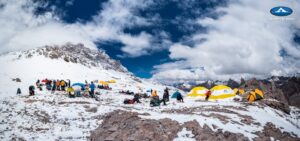
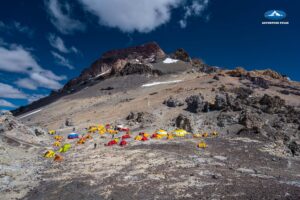
- Day 5 - Trek to PLAZA DE MULAS/ Aconcagua Base Camp (4,260m)
- Day 6 - Aconcagua Base Camp
- Day 7 - Acclimatization climb to MT. BONETE (5,100m)
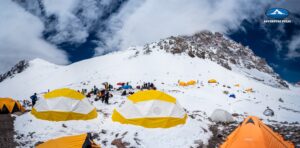
- Day 8 - Load carry to CAMP 1 “CANADA” (4,910m)
- Day 9 - Aconcagua Base Camp
- Day 10 - Trek and stay at CAMP 1
- Day 11 - CAMP 1 to CAMP 2 “NIDO DE CÓNDORES” (5,250m)
- Day 12 - Rest at CAMP 2
- Day 13 - Load Carry to CAMP 3 “CÓLERA” (6,000m)
- Day 14 - Climb to CAMP 3 “CÓLERA”
- Day 15 - SUMMIT (6,962m)
- Day 16 - CAMP 3 to Base Camp
- Day 17 - PLAZA DE MULAS to MENDOZA
- Day 18 - Buffer Day
- Day 19 - Buffer Day
- Day 20 - Fly Out
Inclusions & Exclusions
Trip Cost Includes:
- A qualified and experienced Mountain Guide.
- Transport to and from the airport and to and from the trailhead.
- Two (02) nights accommodation in a 3* hotel in Mendoza City (Double Occupancy), Breakfast included.
- One (01) night accommodation in Los Penitentes: breakfast & dinner included. (Double Occupancy).
- Permit to enter the provincial Park Aconcagua.
- Personal Porters for the higher camps with 10kgs allowance.
- Mules and Porters to carry personal equipment.
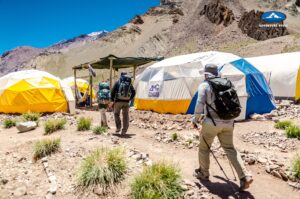
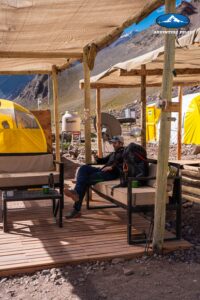
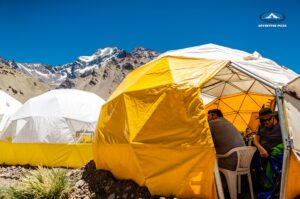
- Fully equipped dining rooms, kitchen in Confluencia & Base Camp.
- WC tents in Confluencia, Base Camp and High Camps.
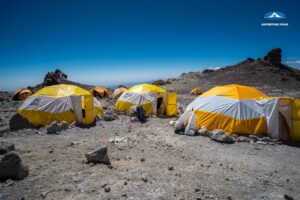
- Accommodation in mountain tents or dormitory domes (when possible and if there is availability) during your stay inside the Park.
- All meals included on the mountain.
- Regular Porter service to specifically carry base tents, group's trash and personal waste on high camps (01 Porter to carry up to 20kgs for the whole group)
- Drinking water and showers at base camp
Trip Cost DOES NOT Include:
- Personal equipment asked on the Required Equipment list.
- Rescue costs or other costs due to the abandonment of the expedition.
- Personal expenses
- Tips to the mountain guides and porters.
- Extra nights in a hotel in case of early return to the city/ in cases you don’t use the “spare days” and decide to come back to Mendoza.
- Travel, Medical insurance, and Extreme Sports insurance that covers Helicopter evacuation & rescue inside the park.
- Meals and Drinks not specified in the itinerary. E.g.: Lunches and Dinners in Mendoza or at Uspallata. Drinks at the included dinner in Los Penitentes.
- Any other service not exclusively specified as "SERVICES INCLUDED" in the previous column.
Things to carry
Download as PDFClimbing Aconcagua will require good quality trekking gear and various technical climbing equipment. In case you are not able to procure any such equipment, we at Adventure-Pulse would be happy to help you procure them.
Apparel
- Thermal Inners - At least 1 pair of Top and Leggings
- 6-8 t-shirts or long-sleeve shirt (cotton / dryfit)
- 2-3 pairs of trekking pants (no denim!)
- 1 Sweater/Sweatshirt
- 1 Fleece Jacket
- 1 Down Jacket
- 1 Waterproof Layer like raincoat or wind-cheater
- 1 pair of hiking boots
- 1 pair of comfortable sandals/floaters/sneakers
- 6-8 pairs of cotton socks (for day)
- 2 pairs of thick/woollen socks (for night)
- Gloves - liner and outer
- Sun hat
- Woollen cap
- Buff
Accessories
- Duffel bag / Rucksack (60L+)
- Daypack / Backpack (20-30L capacity)
- Sleeping bag (can be bought or rented in Kathmandu)
- 2x 1L Bottles (to carry drinking water)
- Lunchbox
- Torch + Batteries / Headlamp
- Knee/Ankle/Wrist Guards
- Trekking Poles
- Sunblock
- Sunglasses
- Moisturiser
- Hand Sanitiser
- Personal Medical Kit
- Personal Toiletries Kit
- Snacks!
Climbing Equipment (will be used on Mt Aconcagua)
- Mountaineering Boots
- Thick Mountaineering mittens or gloves
- Gaters
- Climbing Helmet
- Ice Axe
- Crampons
- Ski goggles
- Mountaineering Harness
- Jumar or Ascender
- 4 Locking Carabineers
- Dyneema Sling / Daisy Chain/ 6 metres of cord 8mm
- Belay Devices such as figure-8, ATC or Gri-Gri
- 2 Non-locking carabineers
- 5mm cord for Prusik Knot
- Pee bottle
Fitness
Download as PDFTECHNICAL QUALIFICATION & FITNESS
Mt Aconcagua is not an easy peak and is only for climbers with sufficient climbing and mountaineering experience. You should not attempt this peak if you have not climbed above 6000mtrs (such as Island Peak), have prior altitude-related acclimatization problems or have not completed a basic mountaineering course. Mt. Aconcagua is a semi-technical peak for climbers who wish to challenge themselves. A climber must also be familiar with the use of technical equipment such as a jumar, ice axe and crampons among others. Climbers should be proficient with Ascending and Rappelling techniques. Climbing a mountain such as Aconcagua requires mental and physical discipline as we are going to stay at high-altitudes and would be required to ferry loads between camps.
You would be required to have a very high fitness level and have the necessary skills to climb. We recommend training for Mt. Aconcagua 4 months in advance. The two verticals of training required are:
PHYSICAL FITNESS:
As the climb is technical and would require you to climb at altitudes as high as 7000m, it is imperative that you possess a high fitness level. High levels of cardiovascular training is required and you would be required to spend at least 10 hours per week working on the physical fitness. Long-distance running, swimming and/or cycling would be suitable. You should also be comfortable carrying close to 20 kgs on your back for sustained periods of time. We would be happy to assist you in drafting a fitness schedule for preparing your body.
Our recommended tips for training for the climber, especially on Aconcagua are as follows:-
Focus on overall training rather than aesthetics.
There isn’t just one specific body part or muscle group you have to exercise to successfully train for climbing. Climbing takes a lot of overall strength and uses several muscle groups.
- Cardio Vascular Training – Running, cycling and swimming form excellent cardio exercises. These are important, as you’ll be climbing over an extended period of time in rarified atmosphere. Your heart and lungs have to be already conditioned for extensive cardio exercise.
- Legs – The Legs are the most used aspect of the body while climbing. Exercises can include squats, calf, and leg raises or lunges.
- Core Muscle Development – Carrying large weight, and prolonged climbing at an inclined gradient puts tremendous strain on the body. It’s also important to work the core muscle groups in the body. When your mountain climbing, you’ll be using all of your muscle groups to facilitate the complex movements across varying terrain.
- Train Outdoors - Its critically important to incorporate varied terrains rather than just the controlled environment of the Gym. Trekking and Hiking along trails are excellent in bridging this gap. Walking on uneven surfaces, steep gradients and varied terrain, help build muscle memory. Long treks, with exposure to the elements, help condition the body to adapt to changing environments. Ideally train with a heavy backpack, allowing you to try simulating the conditions as close as possible thus facilitating the development of endurance.
We recommend outdoor activities such as road or trail running, mountain bike riding, swimming or skiing. All of these activities are fun and help break the monotony of the gym routine.
CLIMBING AND NECESSARY SKILLS:
You would need to have previous climbing experience to be a part of the Mt Aconcagua climb. These would be in the form of previous high altitude treks, mountaineering courses and previous rock climbing experience. Climbs such as Lobuche or Island Peak are also recommended. These can obviously be accrued over a period of time. We would also recommend practising climbing and using the technical equipment regularly at your local crag or rock climbing wall.
FAQs


Backpack offloading
Western style bio-toilet

3:1 guide ratio

Extra Spacious Tents

Small group size

Group airport pick-ups and drops

Premium dining tents

Personalised attention
Featured Blog Posts
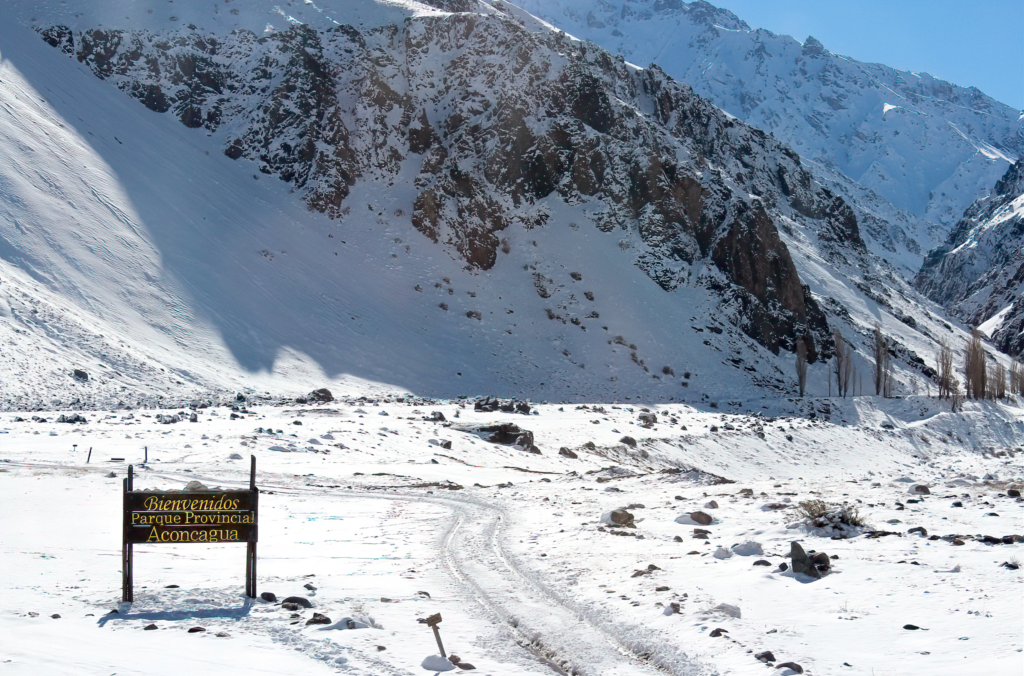 Would You Climb Aconcagua? First hand account of an experienced climber – Part 3 - Our journey continues from Plaza De Mulas The seriousness and thoroughness of this process impressed me deeply. Despite the hundreds…
 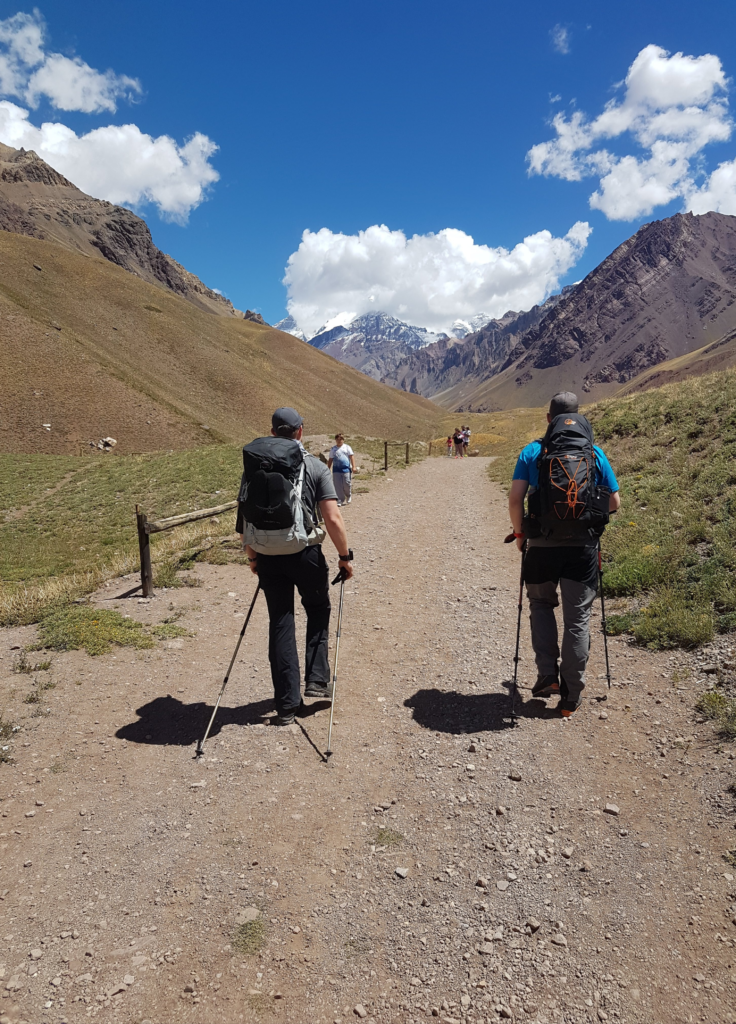 Would You Climb Aconcagua? First hand account of an experienced climber – Part 2 - Recap from A firsthand account – PART ONE Towering at 6,961 meters (22,838 feet), Aconcagua reigns as the highest peak…
 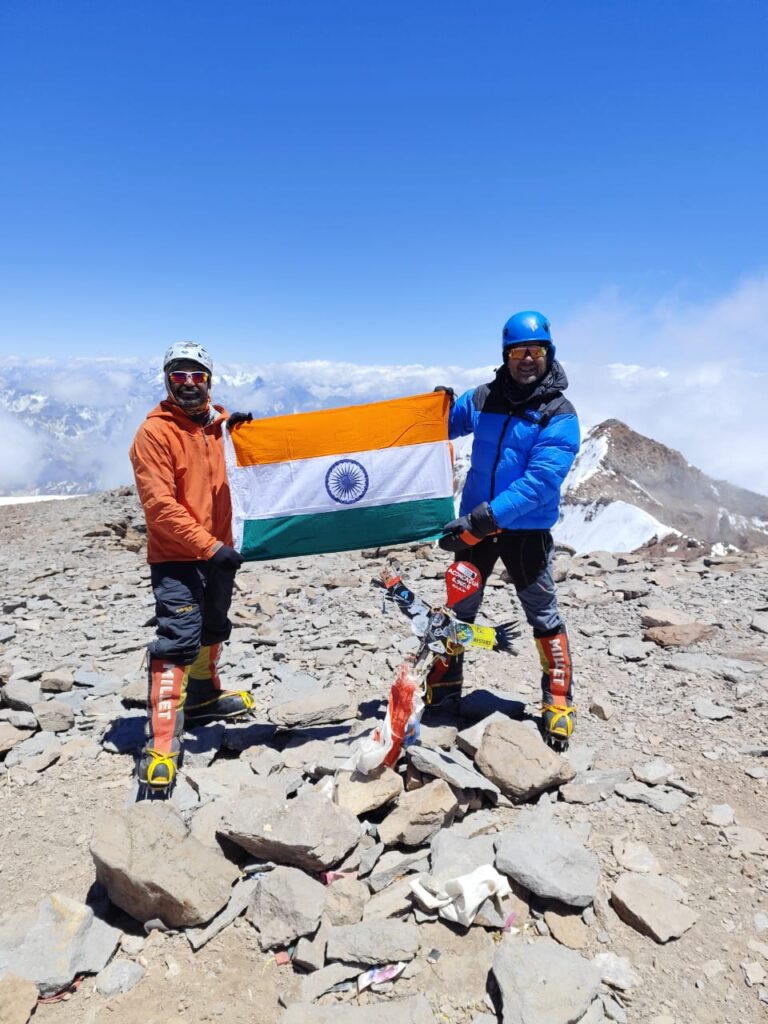 Would You Climb Aconcagua? First hand account of an experienced climber – Part 1 - Mt. Aconcagua Climb - Introduction Aconcagua, standing at a formidable 6,961 meters (22,838 feet), is the highest peak outside of…
 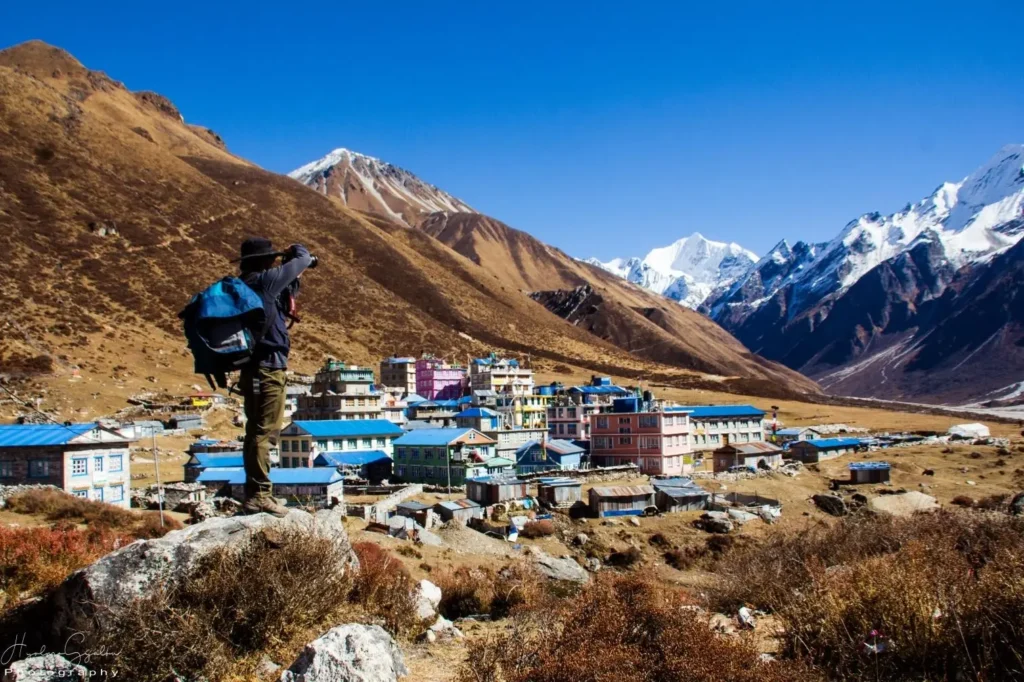 Conquering Mentok Kangri: A Climber’s Guide to Ladakh’s Crown Jewel - Mentok Kangri Climb Overview: Mentok Kangri, or simply "Mentok," is a majestic peak towering over Ladakh, India. Standing at a…