


I recently completed the famous Annapurna Circuit Trek in April 2026. It’s safe to say that the trek has changed considerably over the years. Once known as one of Nepal’s longest trekking routes, the Annapurna Circuit has now become a popular 6 to 8-day trek. You can also combine it with a hike to Tilicho Lake for an even more rewarding experience.
If you’re planning the Annapurna Circuit Trek, I would strongly recommend driving to Manang and acclimatizing there. This is a practical alternative to trekking all the way up from Jagat or Deng. Traditionally, trekkers followed the route from Dharapani through Jagat and Deng before reaching Manang at 3,540 meters. However, improved road connectivity has changed how people approach this trek. Personally, I wouldn’t recommend trekking along motorable roads with vehicles passing every 20 minutes and dust swirling around you.
Instead, I would suggest driving to Manang, spending a few days acclimatizing, and then starting your trek. This allows you to focus on the more scenic sections of the Annapurna Circuit.
Where Does the Annapurna Circuit Trek Actually Begin?
Traditionally, trekkers began the Annapurna Circuit at Dharapani. However, with improved road connectivity, Manang has become a practical starting point for many trekkers. From here, most people begin their journey towards Thorong Phedi and the famous Thorong La Pass.
Of course, some trekkers still begin at Dharapani. They spend an additional three days trekking to Manang before continuing towards the pass. However, in my opinion, driving directly to Manang makes more sense. I would highly recommend spending two to three nights in Manang. This gives you enough time to rest, acclimatize, and explore the surrounding mountains before beginning the trek.
The Road Journey from Kathmandu to Manang
The drive from Kathmandu to Manang is long and usually takes two days. Although the distance is approximately 185 kilometers, the journey can take around 16 to 17 hours. On flatter terrain, you could cover a similar distance in just four to five hours.
We left Kathmandu at 3 pm and reached Besisahar at around 10 pm. Our plan was simple: get some rest and continue the drive the following morning. Besisahar itself doesn’t offer much for trekkers passing through. Most people use it as an overnight stop before continuing towards Manang. However, if you enjoy exploring local breweries, you can also visit the brewery associated with Nepal’s famous Barasinghe beer, located a couple of hours before Besisahar.
The road from Kathmandu to Besisahar is reasonably good for most of the journey. As a result, the drive is relatively comfortable. You can choose between public buses and private jeeps for this section.
Day 2: Driving from Besisahar to Manang
The second day of the drive is a completely different experience. Much of the route involves rough roads and off-road driving as you pass through Chame and Dharapani before continuing towards Manang. The winding roads pass through small Nepali villages and follow the Marsyangdi River. Along the way, you get a wonderful glimpse of rural Nepal and its dramatic mountain landscapes. We left Besisahar at 8 am and continued driving until lunchtime. We stopped for lunch at [name of the place]. After lunch, we had just 30 kilometres left to reach Manang. However, that final stretch took us another three hours!
We passed through several small villages, including [names of the villages], before finally reaching Manang. Nestled deep in the Himalayas and surrounded by the Annapurna mountains, Manang feels like a village far removed from the ordinary world.
Acclimatisation in Manang
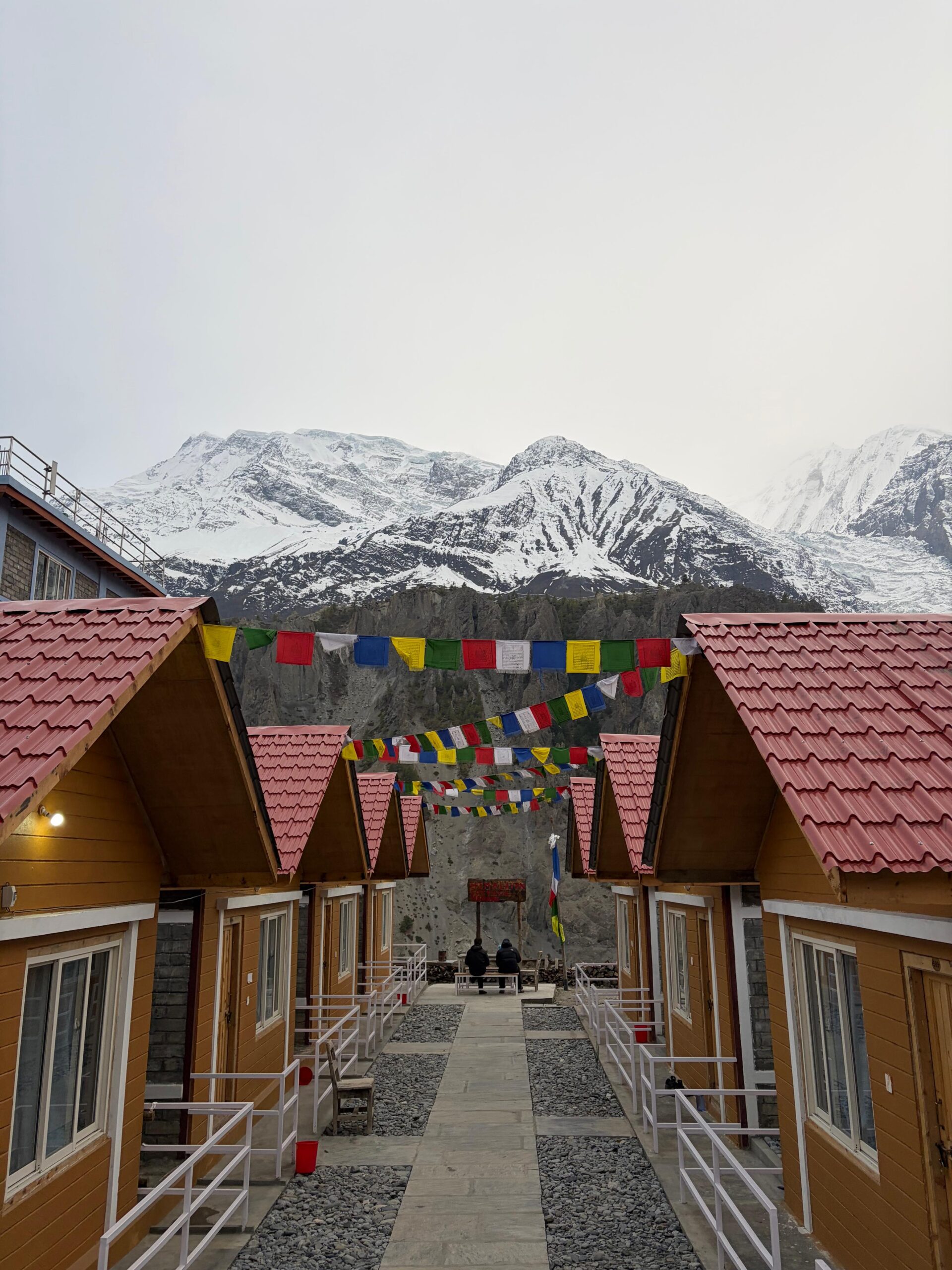
Located at approximately 3,540 metres (11,614 feet), Manang is one of the most important villages along the Annapurna Circuit. In many ways, it reminded me of Namche Bazaar in the Everest region. The village has comfortable lodges, cafés, shops, and other facilities that make it an ideal base for trekkers. It also serves as a starting point for several treks and mountaineering expeditions in the region.
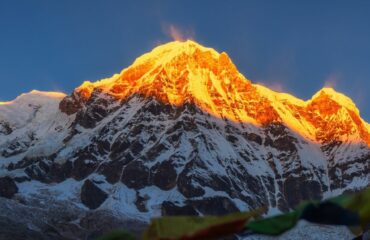
Most trekkers spend two to three days in Manang before continuing towards Thorong La Pass. The village is also famous for its acclimatization hikes, which help trekkers prepare for the higher altitudes ahead. We spent two full days in Manang, combining acclimatization hikes with plenty of time to enjoy the mountain views. We could see several peaks of the Annapurna range, including Annapurna II, Annapurna III, and Annapurna IV.
Our evenings were equally enjoyable. We spent them relaxing in cafés, sipping cappuccinos, and enjoying fresh apple pies. Manang is one of those villages where you always wish you could stay a little longer! However, after two wonderful days of acclimatization, it was finally time to hit the trail.
Recommended Annapurna Circuit Trek Itinerary for 2026 and 2027
Improved road connectivity has shortened the traditional Annapurna Circuit Trek considerably. Therefore, I would strongly recommend combining the Tilicho Lake trek with the crossing of Thorong La Pass. Without the Tilicho Lake detour, trekkers can reach Muktinath after crossing Thorong La Pass in a relatively short itinerary. However, adding Tilicho Lake makes the journey more rewarding and gives you another spectacular Himalayan destination to experience.
Here is the itinerary we followed in April 2026.
Day 1: Khangsar to Tilicho Lake Base Camp
We began the day with a short, approximately 20-minute drive from Manang to Khangsar, located at around 3,950 metres. In my opinion, Khangsar is where the trekking experience towards Tilicho Lake truly begins. We reached Khangsar by 8:30 am and started walking soon afterwards. After an easy, gradual ascent of around two hours, we reached Shree Kharka at approximately 4,070 metres.
The trail was wide and well-marked, with a gentle uphill gradient. We also enjoyed clear views of the Annapurna range along the way. Shree Kharka has several good lodges where trekkers can rest, grab refreshments, or enjoy a meal. After a short break, we continued towards Tilicho Lake Base Camp. Soon, we reached one of the most notorious sections of this trail: a narrow, exposed stretch prone to rockfall.
This section takes approximately 1.5–2 hours to cross. The trail traverses exposed slopes, with loose gravel underfoot and occasional ascents and descents. Falling rocks pose a serious risk, so trekkers must remain alert throughout this section. I would strongly recommend tackling this stretch with a qualified guide. Our team also kept a close eye on one another as we navigated the exposed terrain.
Once we crossed this challenging section, Tilicho Lake Base Camp was within reach. We finally arrived at the base camp, located at approximately 4,200 metres.
Day 2: Tilicho Lake and Back to Base Camp
Although Tilicho Lake isn’t part of the main Annapurna Circuit route, I would highly recommend adding it to your itinerary. The lake offers spectacular scenery and provides an opportunity to experience the high-altitude Himalayan landscape before crossing Thorong La Pass. However, this is a demanding day. The trail climbs from approximately 4,200 metres to 4,919 metres, making the altitude gain significant. We therefore planned an early start to allow enough time for the ascent, a visit to the lake, and the return journey.
Our team left Tilicho Lake Base Camp at 5:30 am. We wanted to reach the lake early, spend some time there, and return to base camp comfortably by late afternoon. Most trekkers follow a similar schedule, leaving early in the morning and returning in time for a late lunch. The trail begins with a gradual ascent before becoming much steeper. As we gained altitude, we encountered a series of steep switchbacks before reaching the glacier area.
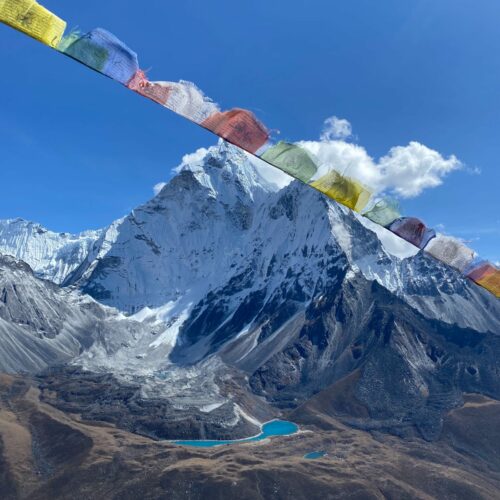
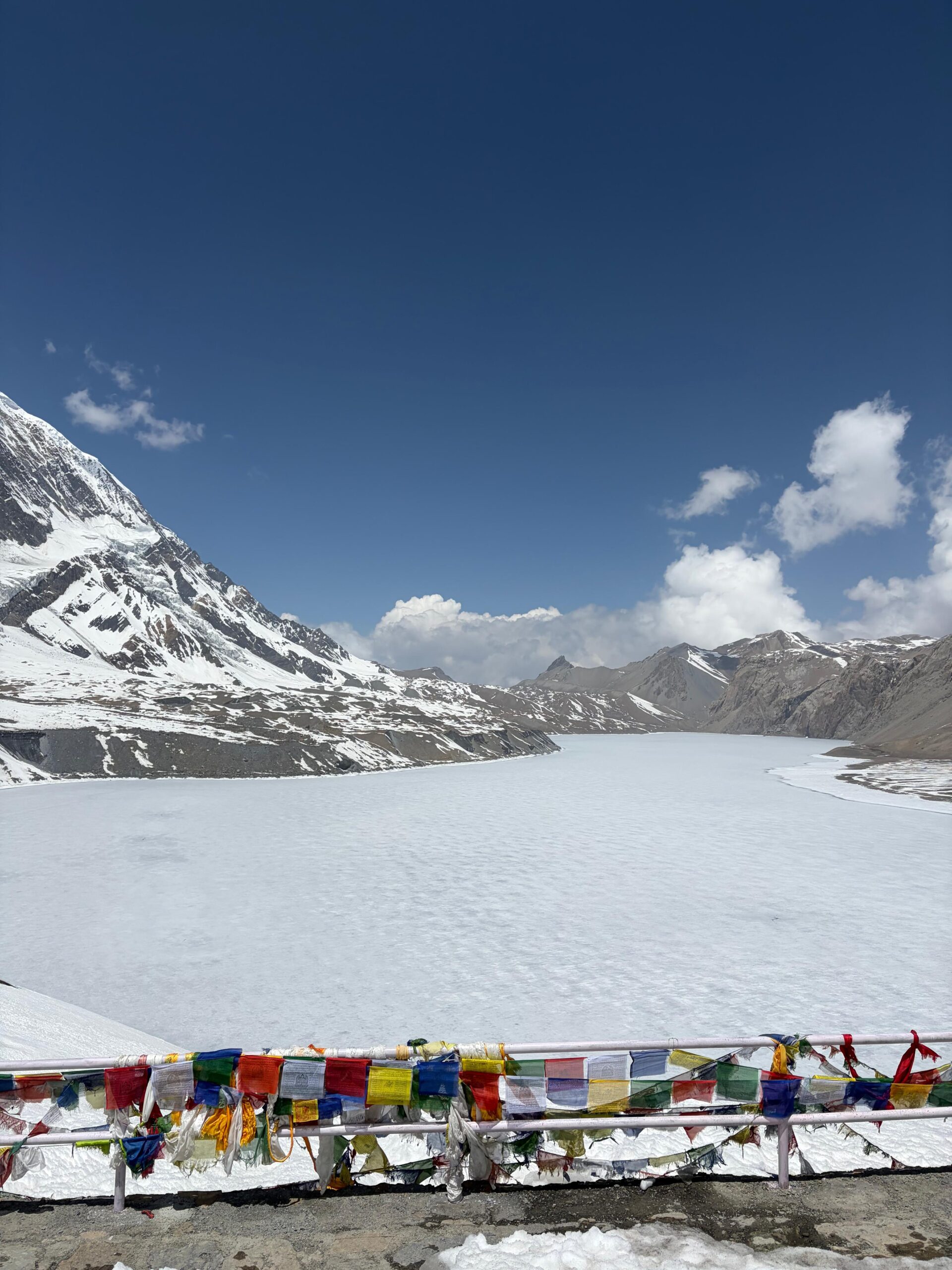
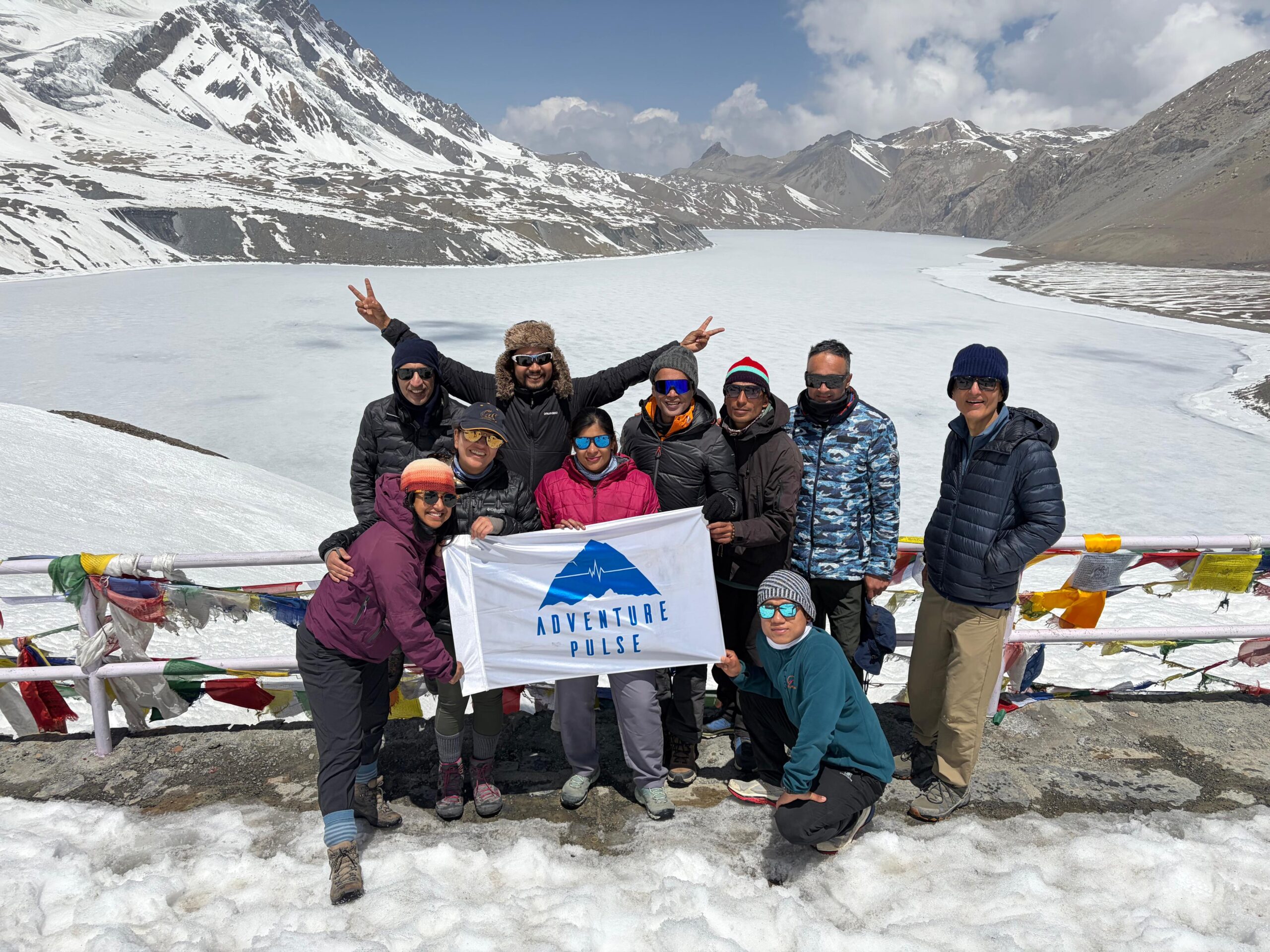
Our team took approximately five hours to reach Tilicho Lake. This is a reasonable estimate for many trekkers, although faster hikers may complete the ascent in around four hours. Given the significant altitude gain, I would recommend maintaining a steady pace rather than rushing. Despite visiting in April, we found the lake completely frozen. It was a remarkable sight! Tilicho Lake is famous for its turquoise-blue water and vast expanse. Seeing it frozen over was an entirely different experience.
We spent around an hour at the lake, taking photographs and sipping hot tea. During the trekking season, a small tea shop may also operate near the lake. If you visit in April, May, October, or November, you may be able to find hot drinks and snacks there, depending on conditions. After enjoying the views, we began our descent. The return journey to the teahouse at Tilicho Lake Base Camp took approximately three hours.
Day 3: Tilicho Lake Base Camp to Yak Kharka
After our visit to Tilicho Lake, we retraced our steps towards Shree Kharka. From there, we took the diversion towards Yak Kharka instead of returning to Khangsar and Manang. Trekkers who skip the Tilicho Lake detour can usually travel directly from Manang to Yak Kharka. However, because we had included the lake in our itinerary, we needed to retrace part of our route before joining the trail towards Yak Kharka.
The day involved several ascents and descents, making it a fairly long trekking day. Nevertheless, the changing mountain scenery kept us motivated along the way. Our team reached Yak Kharka at around 4:30 pm. After checking in, we spent some time relaxing at a bakery, enjoying good coffee and snacks. Yak Kharka offers several accommodation options for trekkers. It is also an important overnight stop before continuing towards Thorong Phedi and the high mountain pass.
Day 4: Yak Kharka to Thorong Phedi
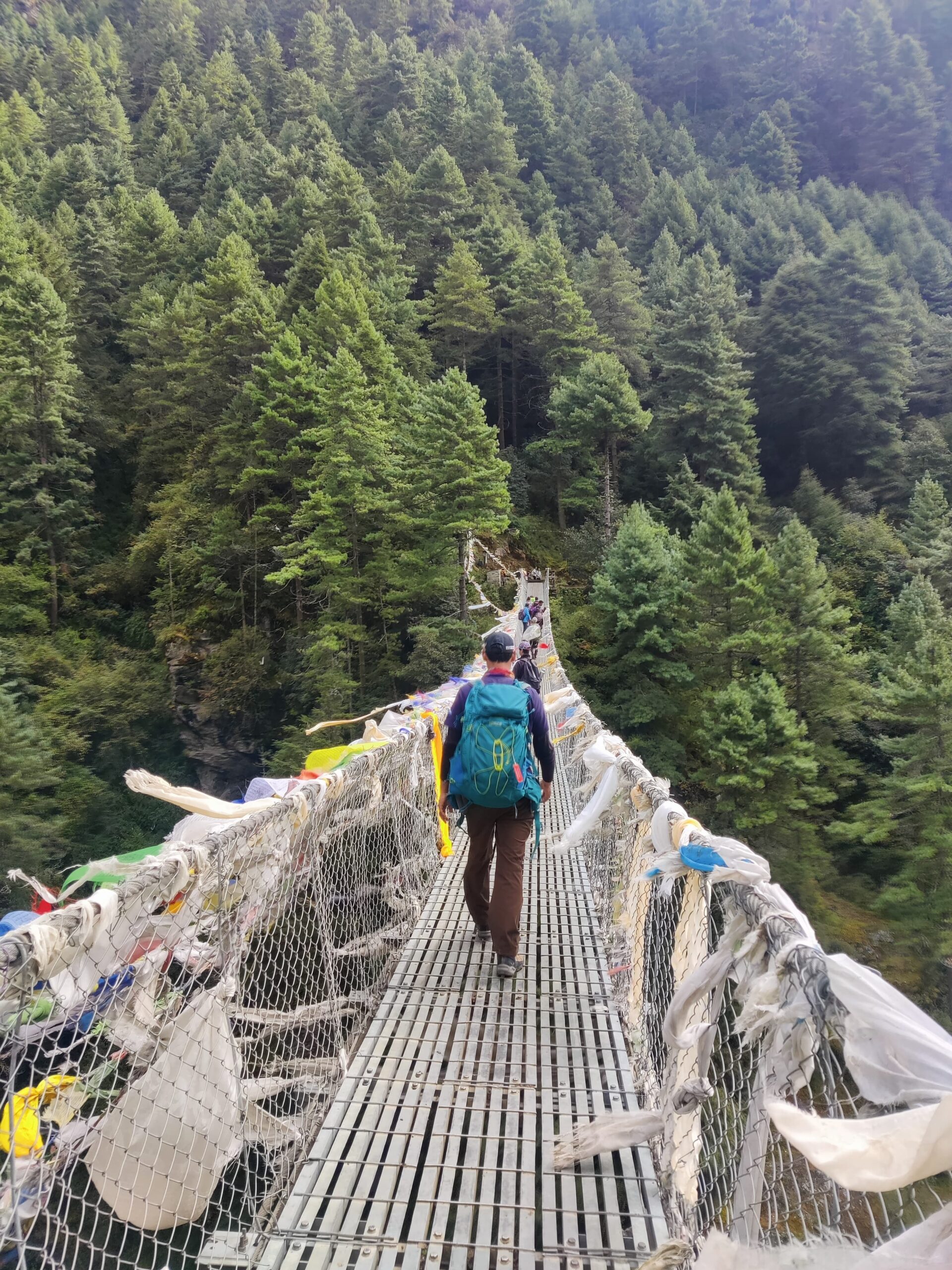
Compared with the other days on the Annapurna Circuit Trek, this was a relatively short trekking day. Most trekkers can comfortably complete the route in around four hours. The trail is generally well-marked and wide, with gradual ascents. Towards the end, we also crossed a long suspension bridge before continuing to Thorong Phedi. Located at approximately 4,450 metres, Thorong Phedi serves as the main staging point for trekkers preparing to cross Thorong La Pass. Accommodation here is limited, so I would recommend arranging your stay in advance, especially during the busy trekking season.
We left Yak Kharka at 8:30 am and reached Thorong Phedi at around 1 pm. Along the way, we took two short breaks and maintained a comfortable pace. The rooms were basic compared with some of the lodges we had stayed in earlier. However, finding accommodation with these facilities at such a high altitude felt like a luxury in itself! The dining rooms were warm, and the menu included hot beverages and even pizza. After a day on the trail, we couldn’t have asked for much more. The rest of the afternoon was all about recovery. We focused on resting, staying hydrated, and preparing for an early start the following morning. Crossing Thorong La Pass would be the biggest challenge of our Annapurna Circuit Trek.
Day 5: Thorong Phedi to Thorong La Pass and Muktinath
Finally, the most challenging day of our Annapurna Circuit Trek had arrived. Most trekkers leave Thorong Phedi around 4 am. An early start gives them enough time to reach the pass by approximately 9–10 am and begin the long descent towards Muktinath. For an average trekker, the ascent to Thorong La Pass takes around four to five hours, including short breaks. The first hour is particularly challenging. The trail climbs steeply through a series of zigzags towards the higher section of the route.
In my opinion, this initial climb is the toughest part of the day. However, once you move beyond the steepest section, the trail becomes more gradual, with gentler uphill traverses and slopes. Regardless of the month you choose to trek, you should prepare for snow at higher elevations. Conditions can vary considerably, especially between Thorong Phedi, the higher slopes, and the pass itself.
As we climbed, we enjoyed spectacular views of the surrounding mountains, including the Chulu peaks and Thorong Peak. Our team maintained a steady pace and took short breaks along the way. We eventually reached Thorong La Pass at 5,416 metres at around 9:30 am. The summit was an incredible milestone. After hours of climbing, standing at the top of one of Nepal’s most famous trekking passes felt immensely rewarding. During the trekking season, a small tea shop may operate near the pass. We spent around an hour at the top, taking photographs and enjoying hot drinks before beginning our descent.
The descent towards Muktinath is long but generally gradual. It takes approximately three hours to reach the usual lunch stop, depending on the trail conditions and your pace. Compared with the steep ascent, the descending trail is wider and has several stretches of gentle downhill walking. Although the distance is considerable, most trekkers find the gradient manageable after completing the climb.
We began our descent at around 10:30 am and reached our lunch stop at approximately 1:30 pm. One important thing to remember is that facilities are extremely limited along this section. You shouldn’t rely on finding tea stalls, lodges, or water points between the pass and your lunch stop. Carry enough water, snacks, and warm clothing before leaving Thorong Phedi. After the long climb and descent, reaching Muktinath was a welcome reward. We had successfully crossed Thorong La Pass, completing one of the most memorable sections of our Annapurna Circuit adventure.
Parting Thoughts
To sum it up – the Annapurna Circuit Trek may have changed over the years, but its mountain landscapes and the experience of being in the Himalayas remain unforgettable. Adding Tilicho Lake to the itinerary makes the journey even more rewarding. My biggest recommendation is to spend enough time acclimatizing in Manang and avoid rushing the trek. With the right preparation, the Annapurna Circuit remains an incredible Himalayan adventure in 2026.
If reading about this adventure has got you excited, wait until you see it! Check out our – “Annapurna Circuit Trek Photo Blog” for breathtaking Himalayan landscapes that will leave you speechless and inspire you to embark on this incredible journey yourself.
Follow us on Social Media – LinkedIn | TripAdvisor | Instagram