Everest Base Camp Trek: Embark on a Life-Changing Journey to the Base Camp of the Highest Mountain in the World with Adventure Pulse
Guided by Everest Summiteers, designed for beginners and seasoned trekkers alike. A non-technical teahouse trek through Sherpa villages, glacial valleys and 14+ years of Himalayan know-how.
Trek to the base of the world's tallest mountain
The Everest Base Camp Trek is more than a trek. It is the most iconic high-altitude trekking route in the Himalayas. With Adventure Pulse, you'll walk in the footsteps of legends, experience Sherpa culture, and stand face-to-face with the world's highest peak.
This is a non-technical trek and does not require rock climbing or rappelling skills, which makes it an ideal introduction to high-altitude trekking for fit beginners and adventure enthusiasts. The route begins in Lukla, a small mountain airstrip town at roughly 2,800 metres, and over two weeks winds through the Khumbu Valley, home to the Sherpa community. Along the way you'll cross swinging suspension bridges over the Dudh Kosi river, walk through rhododendron forests and Tibetan-Buddhist gateways, and camp for the night in comfortable teahouses with hot meals, electricity and, in most villages, internet access.
The Everest Base Camp Trek in Nepal is one of the highest non-technical treks available for amateur trekkers, and is recommended by Lonely Planet as one of the "Top Ten most beautiful trekking destinations in the world." Every day brings the Himalayas closer — Thamserku, Kongde Ri, Ama Dablam, Lhotse and finally Everest itself, until the trail ends at a stretch of glacial moraine below the world's highest peak.
Why trekkers choose the EBC trail
Beyond the summit views of Everest, Lhotse, Nuptse, Pumori, Ama Dablam, Kangtega and Thamserku, the trek is as much a cultural journey as a physical one — an extended stay inside Sherpa hospitality, from monastery visits at Tengboche to yak-breeding villages like Pheriche. It is a genuine test of stamina and mental resilience: altitude past 5,400 metres, cold nights and shifting terrain make every high point feel earned.
Why Choose Adventure Pulse for Your Everest Base Camp Trek
Built by people who've actually summited Everest — here's what that means for you on the trail.
Trust & Expertise
Adventure Pulse is one of the first adventure companies from India to start operating in Nepal, with a permanent office in Kathmandu. Our Guided Everest Base Camp Treks are led by Everest Summiteers and experienced mountaineers. Our team of trek leaders and local guides bring with them years of experience and mountain expertise. Their firsthand knowledge of high-altitude challenges, combined with years of guiding experience in the Himalayas and across the globe, means you are learning from the very best. Every decision taken in those high-altitude environments, from pacing to acclimatization, is backed by expertise earned at the highest level.
Safety First
With over 15 years of conducting Himalayan expeditions and a 100% safety record, we put your safety and well-being above all else. Our Everest Base Camp Trek itinerary includes gradual acclimatization, thus increasing the chances of a successful completion of the trek to the base camp and back. We provide medical support and keep group sizes small to ensure personalized attention. For us, you're never just a number — you're part of our team.
Beginner-Friendly
Are you just starting your Himalayan trekking journey? Worried about whether you're fit enough? Don't be. Adventure Pulse has guided hundreds of first-time trekkers to Everest Base Camp. Our philosophy is simple: it's not about extreme fitness, it's about determination, pacing, and support. With our guidance and a dedicated training plan of about 2 months, even beginners can achieve this iconic milestone.
Authentic Experience
Trekking in Nepal is as much about culture as it is about the mountains. During the Everest Base Camp Trek, you'll stay in traditional tea houses, share stories with Sherpa families, and immerse yourself in the warmth of Himalayan hospitality. With carefully selected teahouse stays, we ensure your journey is not only about reaching Base Camp but also about connecting with the spirit of the region.
Small Groups
This is what sets us apart from other commercially run Everest Base Camp treks. We keep our groups intimate so you can form genuine connections with your local Nepalese guides, fellow trekkers, and the landscape itself. This creates a supportive environment where every challenge feels shared, and every triumph feels celebrated together.
Best time to trek to Everest Base Camp
Spring and autumn give the clearest skies and the most predictable trail conditions — which is also why they're the busiest months in the Khumbu. Winter trades crowds for cold.
Spring (March–May)
Rhododendrons bloom along the lower trail and the weather is settled enough for most Everest climbing expeditions to launch during this window.
Autumn (Late Sep–Nov)
The post-monsoon skies are the clearest of the year, with dry trails and dependable mountain views — the most popular season on the route.
Winter (Dec–Feb)
Quiet trails and empty teahouses, but many lodges close for the season and temperatures demand serious cold-weather gear.
Can beginners really do the Everest Base Camp trek?
It's the question every first-time enquirer asks, and the honest answer is yes — with the right preparation. In 14+ years of running this route, Adventure Pulse has taken trekkers as young as 6 and as senior as 75 to Base Camp. It's still a serious undertaking: long trekking days, altitude up to 5,545 metres, cold nights and changing terrain make it physically demanding.
What makes the difference is preparation. Adventure Pulse builds a personalised fitness plan for every trekker, keeps a high guide-to-client ratio so nobody is rushed, and designs the itinerary around two full acclimatisation days rather than pushing straight uphill.
- Personalised fitness plan
Pre-trek training guidance tailored to your starting fitness level. - Built-in acclimatisation
Two rest days at Namche Bazaar and Dingboche, following the "climb high, sleep low" rule. - Higher guide-to-trekker ratio
So you can move at your own pace, not the group's fastest pace. - Curated teahouse stays
Accommodation chosen for comfort and hygiene along the whole route.
The climb, day by day
Every altitude gain on this trail is deliberate — the itinerary is paced so your body has time to adjust before the next push upward.
15-day Everest Base Camp itinerary
Tap any day to expand the full route detail, distance context and overnight stop.
Day 1Arrival in Kathmandu
1,400m▾
Day 2Drive to Ramechhap, fly to Lukla, trek to Phakding
2,810m → 2,660m▾
Day 3Trek to Namche Bazaar
3,440m▾
Day 4Acclimatisation in Namche, hike to Khumjung
3,900m▾
Day 5Trek to Debuche via Tengboche Monastery
3,870m▾
Day 6Trek to Dingboche
4,252m▾
Day 7Acclimatisation hike to Nangkarshang
5,010m▾
Day 8Trek to Lobuche
4,930m▾
Day 9Trek to Everest Base Camp, overnight Gorakshep
5,364m▾
Day 10Summit Kalapatthar, descend to Pheriche
5,545m → 4,200m▾
Day 11Trek back to Namche Bazaar
3,440m▾
Day 12Descend to Lukla
2,810m▾
Day 13Fly back to Kathmandu
1,400m▾
Day 14Buffer day for bad weather
—▾
Day 15Depart from Kathmandu
—▾
Fitness prep, the Everest Base Camp packing list & training tips
Everything you need to arrive at Lukla ready — from what to pack to how to train in the weeks before you fly out.
Included
- Group airport pick-up and drop in Kathmandu
- Kathmandu–Ramechhap–Lukla–Ramechhap–Kathmandu transfers & flights
- Teahouse accommodation through the trek
- All meals during the trek (breakfast, lunch, dinner)
- Experienced Everest-summiteer-led guides and support staff
- Backpack offloading (porter support)
- Personalised, high guide-to-trekker ratio attention
- Necessary trekking permits (Sagarmatha National Park & TIMS)
Excluded
- International airfare to/from Kathmandu
- Nepal visa fees
- Travel insurance with high-altitude evacuation cover
- Personal trekking gear (see packing list)
- Hot showers, Wi-Fi/charging at teahouses (paid locally)
- Tips for guides and porters
- Any costs from itinerary changes due to weather
A tried-and-tested Everest Base Camp packing list, refined over 14+ years of running this route in every season.
- Insulated down jacket & fleece layers
- Waterproof, windproof outer shell
- Sturdy, broken-in trekking boots
- Thermal base layers (upper & lower)
- Trekking poles
- 4-season sleeping bag (rated to −15°C or lower)
- Sun hat, warm beanie & gloves (liner + insulated)
- UV-protection sunglasses
- Headlamp with spare batteries
- Water bottles / hydration bladder & purification tablets
- High-SPF sunscreen & lip balm
- Personal first-aid kit & Diamox (on doctor's advice)
The Everest Base Camp trek involves 5–7 hours of walking on most days at increasing altitude, so cardiovascular fitness matters more than raw strength. Adventure Pulse recommends starting preparation 8–10 weeks (about 2 months) before departure — the same dedicated training window we build into every beginner's plan:
- Brisk walking, jogging or cycling 4–5x/week
- Stair climbing or hill repeats with a loaded backpack
- Bodyweight strength training for legs & core
- Longer weekend hikes of 3–4 hours where possible
- Breathing and stamina-building exercises
- A pre-trek medical check-up, especially for cardiac or respiratory history
Adventure Pulse provides a personalised fitness plan and pre-trek training assistance to every registered trekker — it's not about extreme fitness, it's about determination, pacing and support.
Built by people who've actually summited Everest
Summiteer-led
India's only adventure company led by Everest summiteers.
15+ years
Over 15 years of dedicated Himalayan trekking experience.
Tripadvisor recognised
5-time Travellers' Choice Award winner.
100% safety record
Every trek run with safety as the non-negotiable priority.
🎒 Backpack Offloading
Porter support so you trek light.
👥 Small Group Size
Personal attention, not a crowd.
🚐 Airport Transfers
Group pick-up and drop in Kathmandu.
🤝 Personalised Care
High guide-to-trekker ratio throughout.
Everest Base Camp trek cost — a transparent breakdown
No hidden add-ons. Here's exactly what's covered in your Everest Base Camp trek package, and what to budget for separately.
What's included
- Sagarmatha National Park & TIMS trekking permits
- Teahouse accommodation for the full trek
- All meals during the trek (breakfast, lunch, dinner)
- Everest-summiteer-led guides and experienced support staff
- Kathmandu–Ramechhap–Lukla–Ramechhap–Kathmandu transfers & flights
- Backpack offloading (porter support)
- Group airport pick-up and drop in Kathmandu
What's not included
- International airfare to/from Kathmandu
- Nepal visa fees
- Travel insurance with high-altitude evacuation cover
- Personal trekking gear and equipment
- Hot showers, Wi-Fi/charging at teahouses (paid locally)
- Tips for guides and porters
- Personal expenses and any costs from weather-related itinerary changes
For a detailed quote based on your preferred departure month and group size, message us on WhatsApp or send an enquiry below.
Upcoming Everest Base Camp departures
| Month | Dates | Status | |
|---|---|---|---|
| October 2026 | 5th Oct – 19th Oct | Open | Enquire |
| October 2026 | 16th Oct – 30th Oct | Open | Enquire |
| November 2026 | 9th Nov – 23rd Nov | Open | Enquire |
| April 2027 | 16th Apr – 30th Apr | Open | Enquire |
| May 2027 | 11th May – 25th May | Open | Enquire |
Don't see a date that works? Message us on WhatsApp — private and custom-date departures can be arranged.
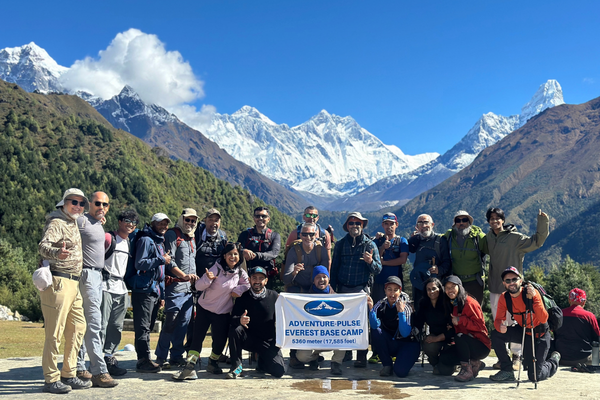
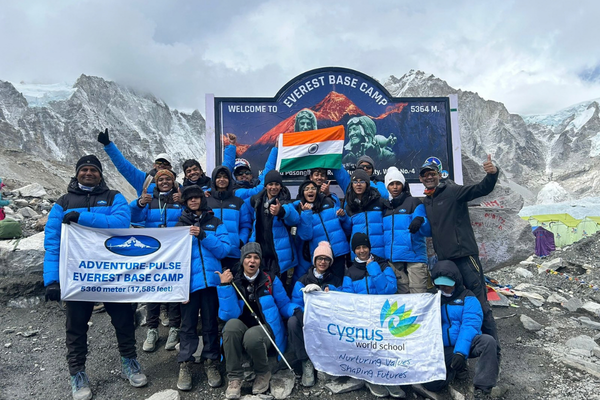
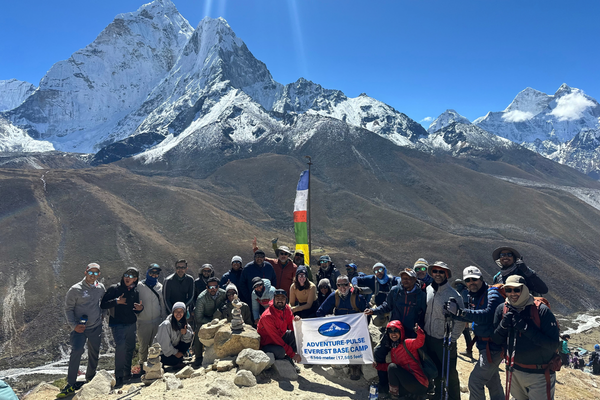
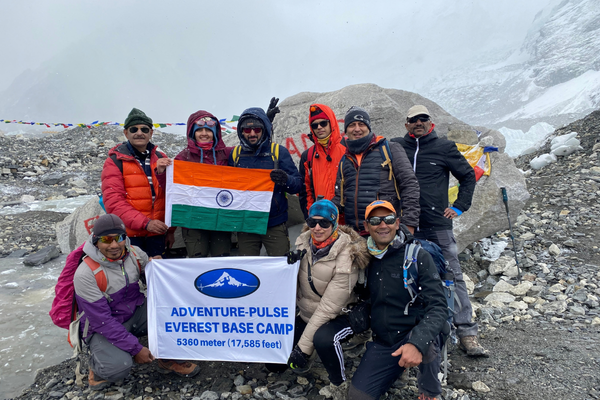
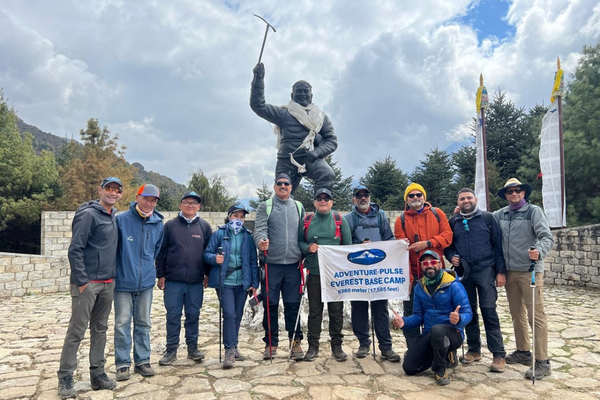
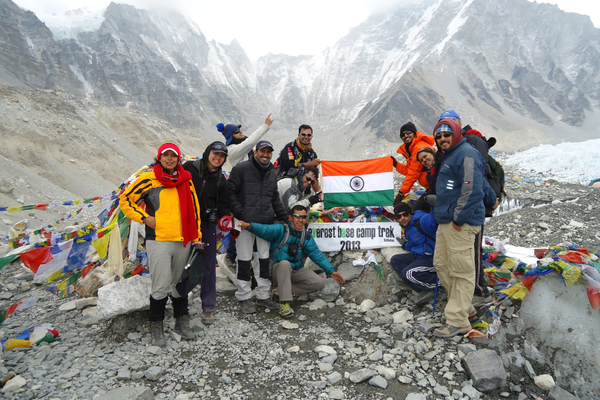
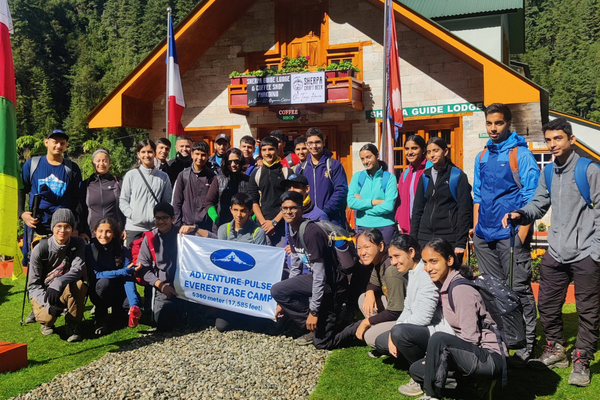
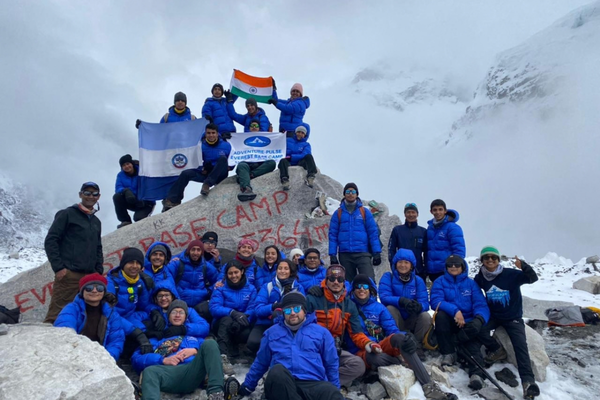
The trail, illustrated
A landmark-by-landmark look at what you'll pass on the way to Base Camp.
"Another incredible experience with Adventure Pulse! Kilimanjaro was my third trek with the team, after Everest Base Camp and the Druk Path Trek, and once again the experience was excellent from start to finish. The guides, trek leaders and entire support team were incredibly caring, experienced and encouraging throughout the journey. Reaching the summit was unforgettable, but it was the people and teamwork that made the experience truly special."
"Doing the Everest Base Camp trek with Adventure-Pulse was an unforgettable experience. From training plans and pre-trek guidance to the arrangements on the mountain, everything was handled seamlessly. The guides and support team went above and beyond, always putting our safety first, especially when weather caused unexpected changes. Their professionalism, care and passion for the mountains made the entire journey truly memorable."
"My Everest Base Camp trek with Adventure Pulse was my first trekking experience, and the team made it truly memorable. The guides went far beyond their role, supporting us with safety, health, guidance and plenty of encouragement throughout the journey. When bad weather disrupted our return from Lukla, the team stayed in constant communication, explained every option and worked together to get us safely back to Kathmandu. Their calmness and coordination during an unexpected situation really stood out."
Everest Base Camp guides & stories
Everest Base Camp: A Complete Trek Guide
Route, permits and preparation notes from our guide team.
Read on the blog →Everything About the Everest Base Camp Trek
A ground-up primer for first-time high-altitude trekkers.
Read on the blog →Everest Base Camp Trek — Trekker Notes
Field notes and tips from a recent Adventure Pulse departure.
Read on the blog →The Highest Café in the World: Dingboche at 4,410m
A stop worth knowing about on your way to Base Camp.
Read on the blog →Everest Base Camp trek — frequently asked questions
Is the Everest Base Camp trek suitable for beginners?
▾
Yes. It is a non-technical trek that needs no climbing or rappelling skills. With prior fitness preparation, the right gear and a well-paced itinerary with built-in acclimatisation days, first-time high-altitude trekkers regularly complete it — Adventure Pulse has guided trekkers from age 6 to 75.
How many days does the Everest Base Camp trek take?
▾
Adventure Pulse's itinerary runs 15 days in total, including 2 days in Kathmandu, roughly 10-11 trekking days with acclimatisation stops, and one buffer day for weather delays.
What is the highest altitude reached on the trek?
▾
Everest Base Camp itself sits at 5,364m, while most trekkers also summit Kalapatthar at 5,545m for the closest possible view of Everest — the highest point of the trip.
What is the best time to trek to Everest Base Camp?
▾
Spring (March–May) and autumn (late September–November) offer the clearest skies and most stable weather. Winter (December–February) is quieter but colder, with many teahouses closed.
Where do trekkers stay during the trek?
▾
The route is a classic teahouse trek — you'll stay in locally-run lodges in villages such as Phakding, Namche Bazaar, Tengboche, Dingboche, Lobuche and Gorakshep, with meals, electricity and often Wi-Fi.
How does Adventure Pulse manage altitude sickness risk?
▾
The itinerary is built around a gradual ascent profile with two dedicated acclimatisation days at Namche Bazaar and Dingboche, following the "climb high, sleep low" principle, with experienced guides monitoring every trekker.
How do I reach Lukla, the starting point?
▾
Trekkers drive roughly 4 hours overnight from Kathmandu to Ramechhap, then take a 30-minute flight to Lukla — timed for calmer early-morning mountain weather.
What is included in the trek package?
▾
Backpack offloading, small group sizes, group airport pick-up and drop, and personalised attention with a high guide-to-trekker ratio, led by Everest-summiteer guides.
How do I book the Everest Base Camp trek?
▾
Send an enquiry through the form on this page, or message Adventure Pulse directly on WhatsApp at +91-7823857531 or +91-7709002311.
Enquire about the Everest Base Camp Trek
Reach us however's easiest — WhatsApp, email, or straight to the registration page — and the team will confirm dates, pricing and preparation guidance.
Office Address
Adventure Pulse, Palace Orchard, NIBM – Corinthian, 20, NIBM Ext Rd, Mohammed Wadi, Pune, Maharashtra 411060